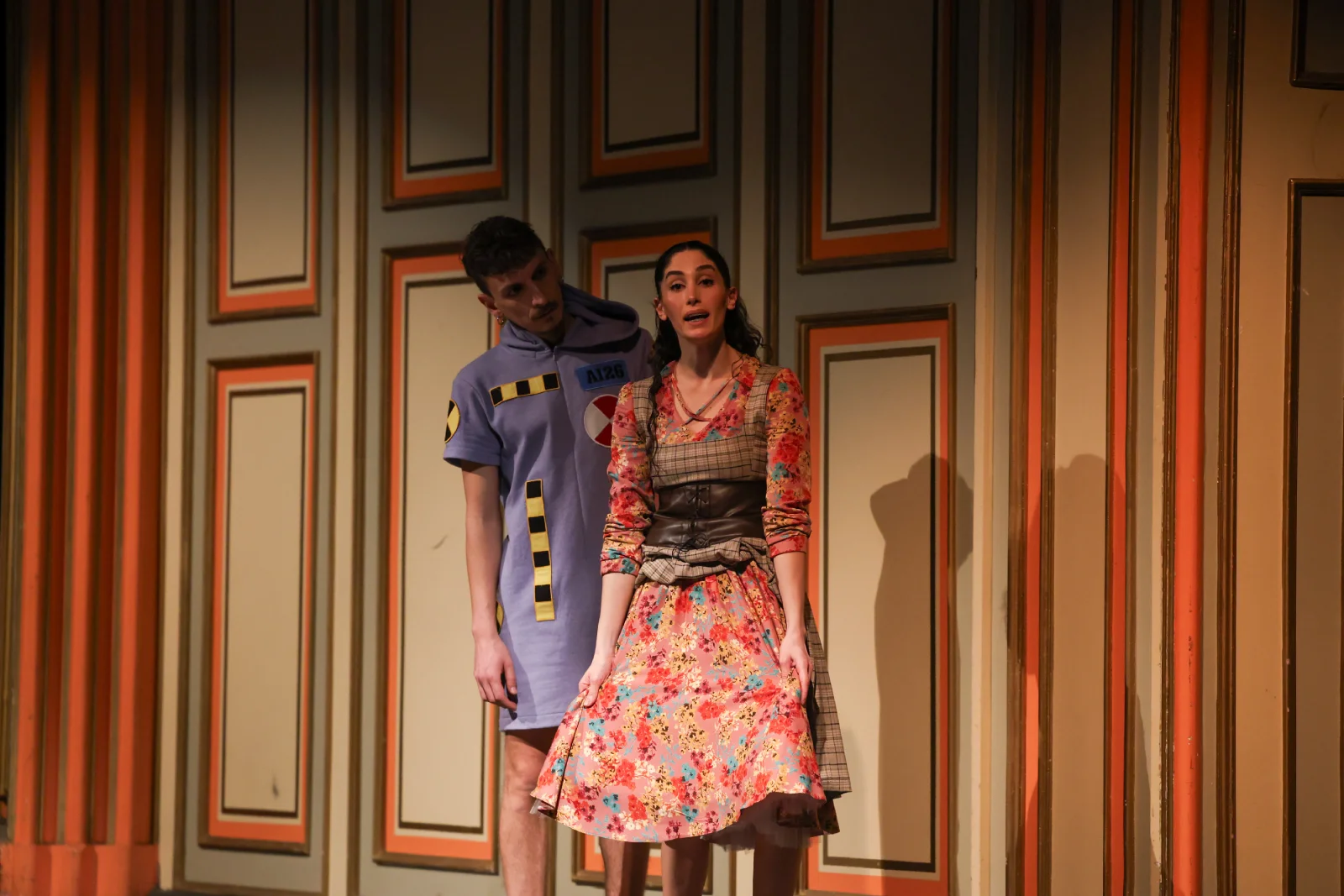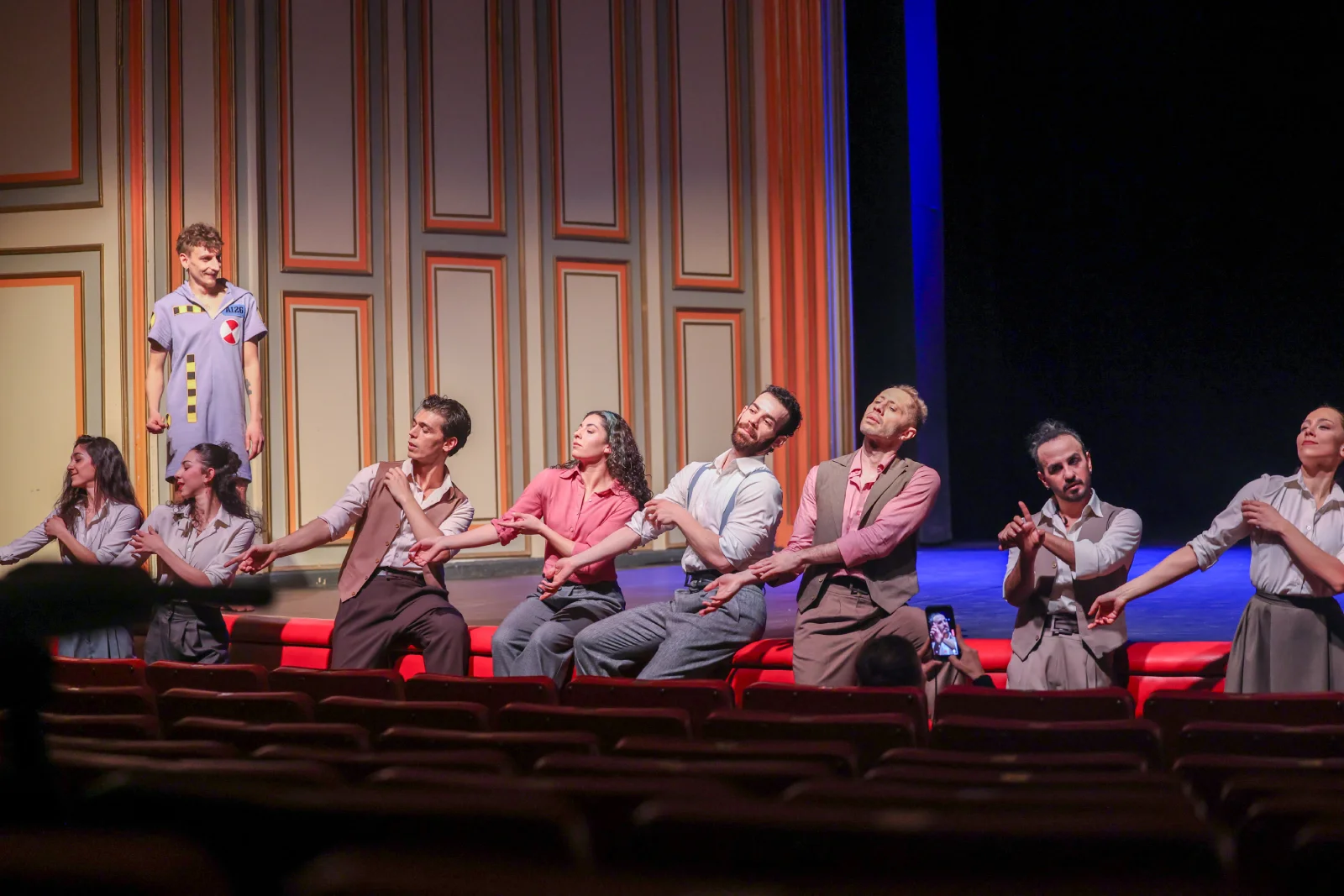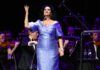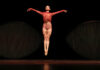
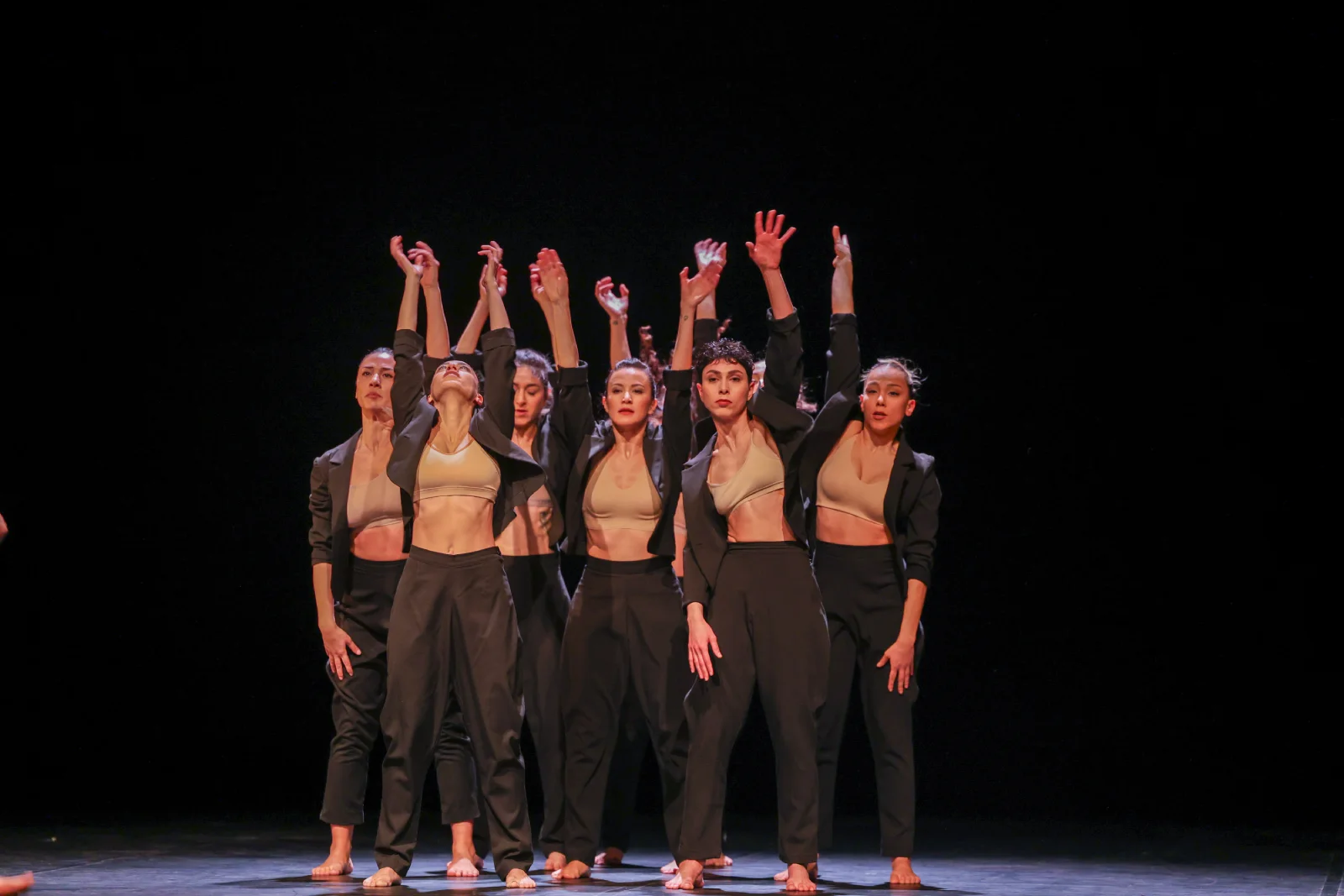
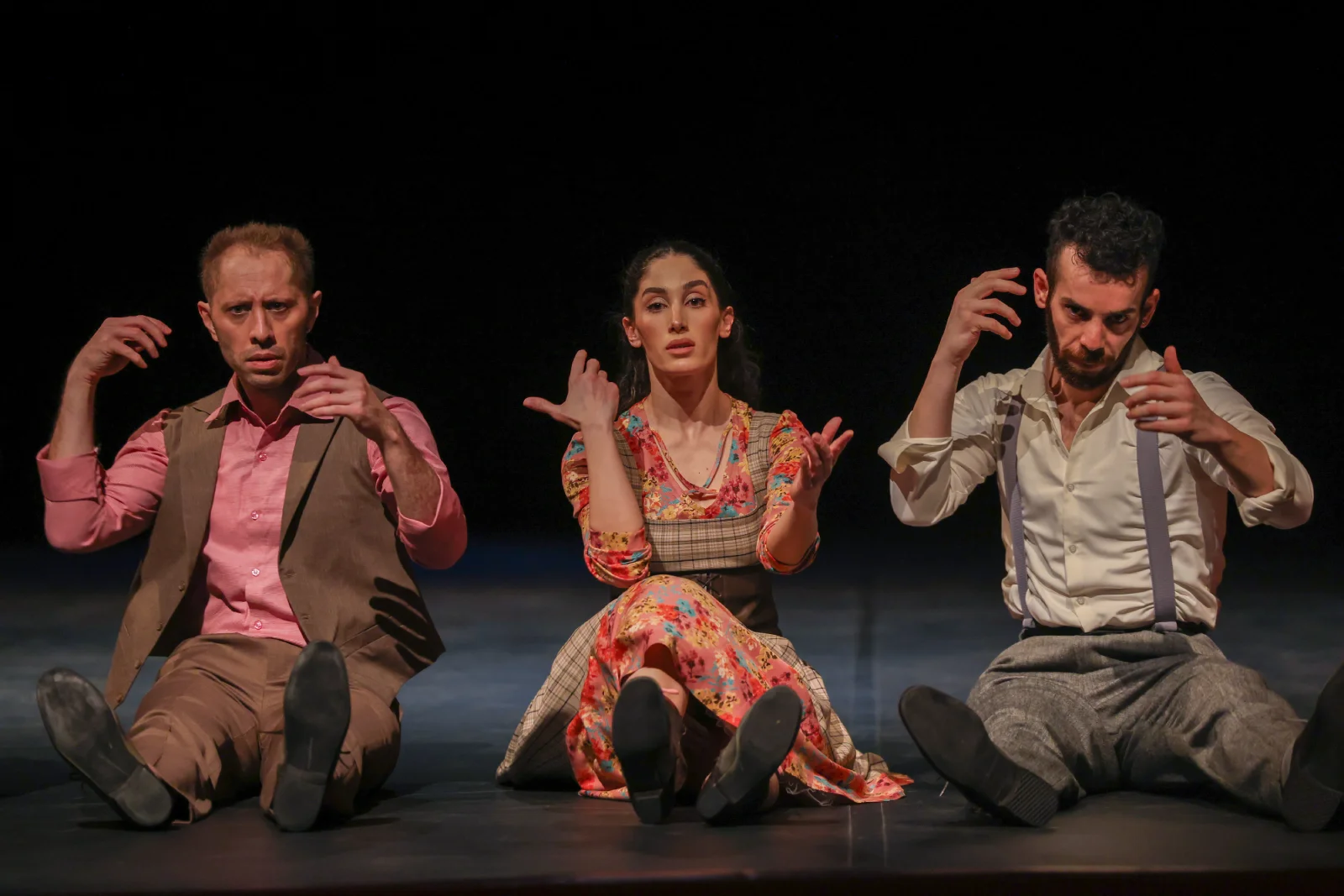
The Modern Dance Company of the Ankara Devlet Opera ve Balesi (ADOB) presented Frequency, an evening that brings together two contrasting works: Dong Kyu Kim’s Excitement and Until the Last Heartbeat, a new piece by British choreographer Michael Charles Popper, which premiered last night. Popper frames the work around the potential and impermanence of human life, describing it as a reflection on everything that remains possible until the very last moment. “We succeed, we fail, we learn or we don’t, we create or we destroy. But all of it remains possible until that final heartbeat. Human life feels tangible and real while we live it, yet we are always aware of how brief and fragile it is. We feel permanent, but we know we are not.”
The two-part performance opens with Dong Kyu Kim’s Excitement, which explores the idea that human beings exist not in isolation but within a collective. The choreography highlights the value of moving together, translating the dynamics of coexistence into physical expression on stage.
The second act features the world premiere of Until the Last Heartbeat. Popper explains that he intends to create a work that provokes thought or emotional response, in essence, something that generates a deeply human reaction. The piece is built on that premise.
A LIFE FULL OF POSSIBILITY
Popper notes that the title carries a dual meaning. On one level, it points to the immense potential within human life and humanity as a whole. On another, it underscores the brevity of existence. “Whether for us as individuals or for humanity, there is an extraordinary potential in everything life can offer. We succeed, we fail, we learn or we don’t, we create or we destroy. But all of this is only possible until the last heartbeat.”
He highlights the paradox at the heart of human existence. Life appears concrete and real, yet at the same time, it is fleeting. According to Popper, this tension defines the human condition. “We experience life as something solid, yet we are constantly aware of its shortness. We feel enduring, but we know that we are not.”
He also draws attention to the limited nature of life, describing it as both precious and unpredictable. “Sometimes we embrace life, sometimes we resent it. But in every case, we know how short it is.”
Popper adds that the piece reflects his own artistic background. With experience across theatre, opera, dance, and music, he approaches choreography from multiple perspectives, as a performer, a musician, and an observer. His work in writing further expands that perspective, shaping a broad and intellectually curious artistic voice.
TRACES OF DIFFERENT DANCE TRADITIONS
Popper explains that the choreography incorporates subtle references to different cultural traditions. While the piece does not directly reference flamenco, it includes elements inspired by a Portuguese interpretation of fandango. Unlike its Spanish counterpart, he notes, fandango in Portugal is often associated with competition between men, an idea that appears in the work only as a suggestion rather than a direct narrative.
Musically, the piece brings together contrasting rhythmic structures. Movement material drawn from a 6/8 musical framework is placed within a 3/4 rhythm. Although these structures do not align perfectly, Popper emphasizes that this intentional mismatch creates a sense of tension and unease. “It doesn’t fully fit, yet somehow it still holds together. That tension is deliberate.”
Although the work does not rely on a text-based theatrical language, Popper notes that it still carries traces of his theatre background. His experience in experimental and physical theatre shapes the structure of the choreography, reflecting earlier periods of his career when he was involved in more radical and exploratory projects.