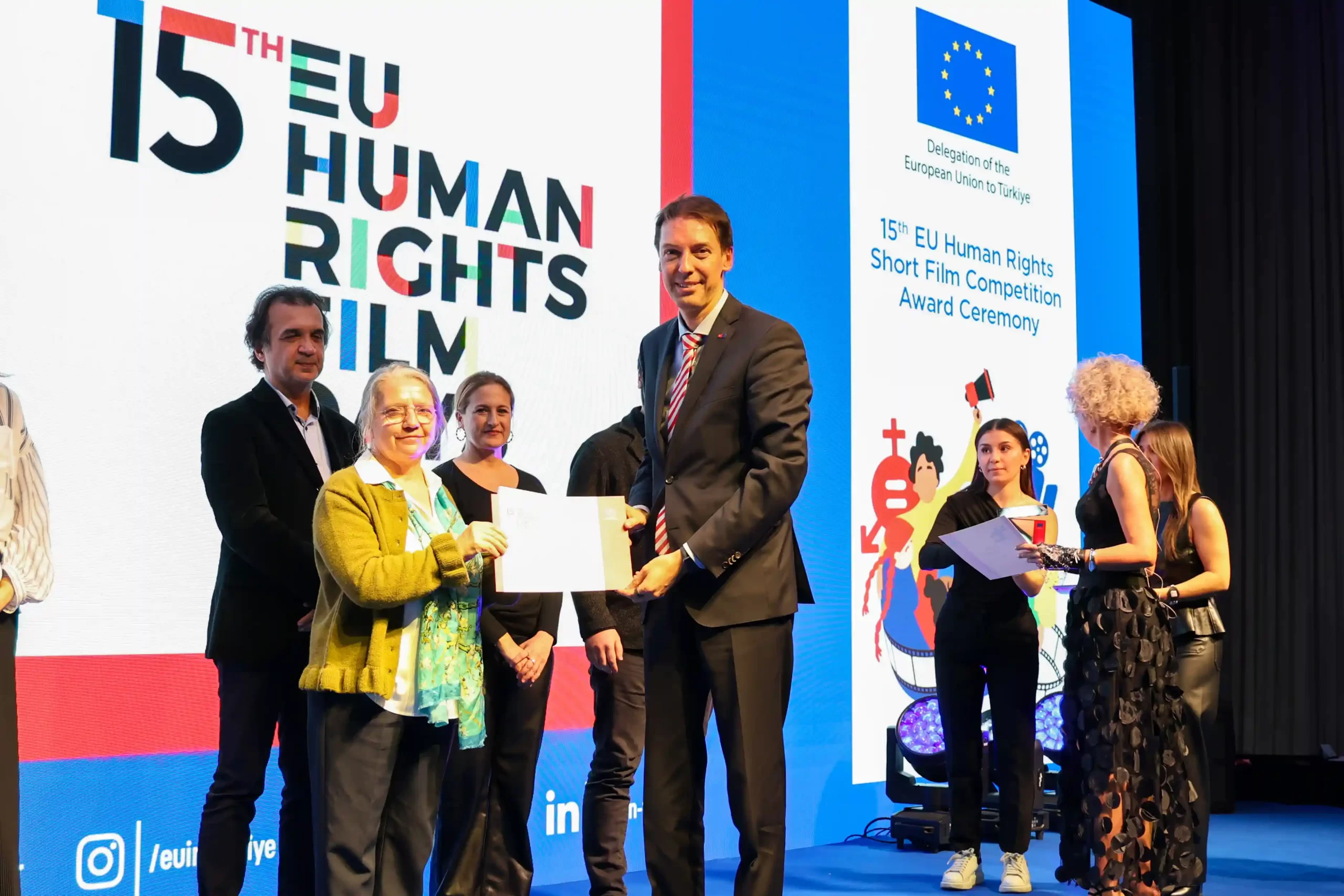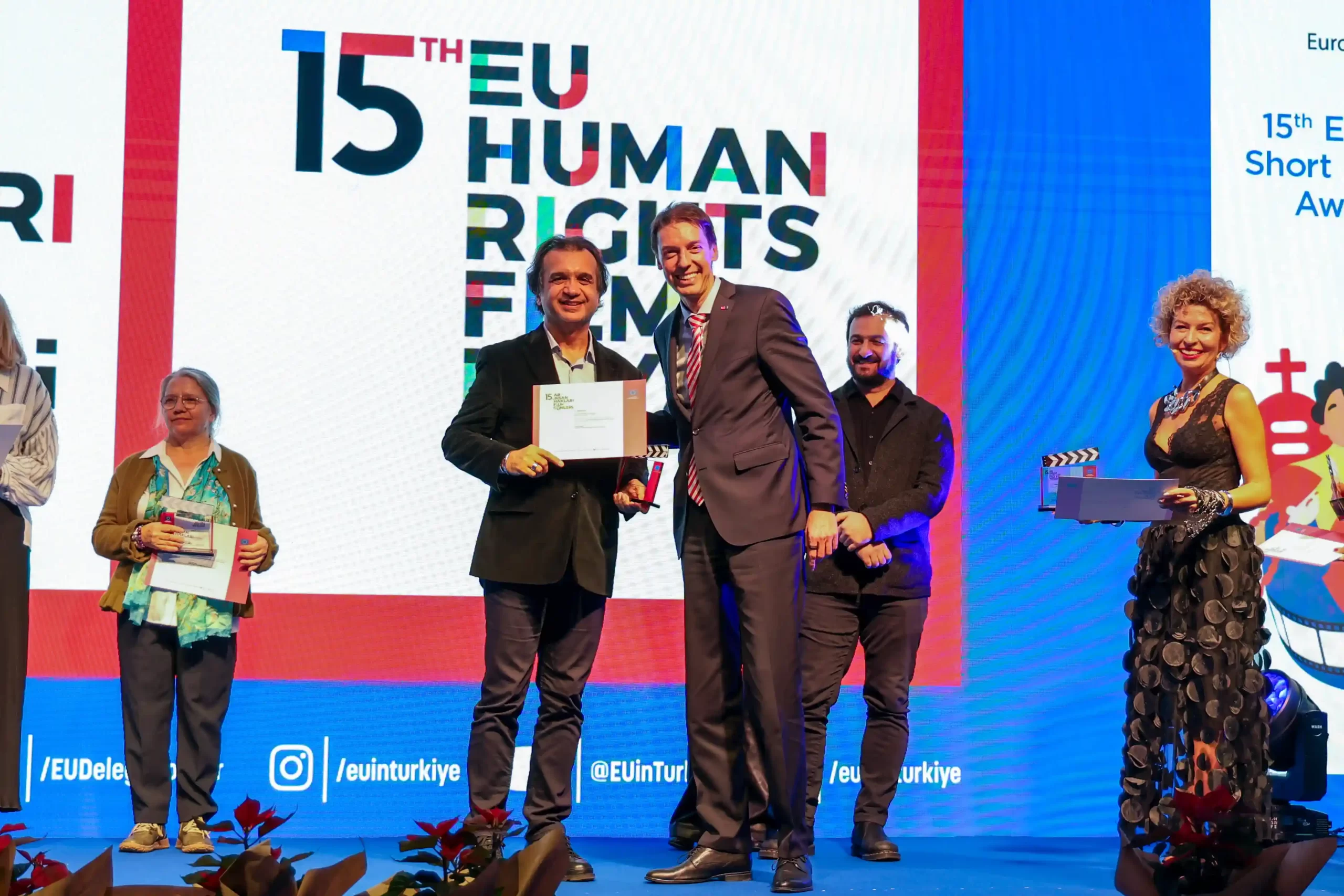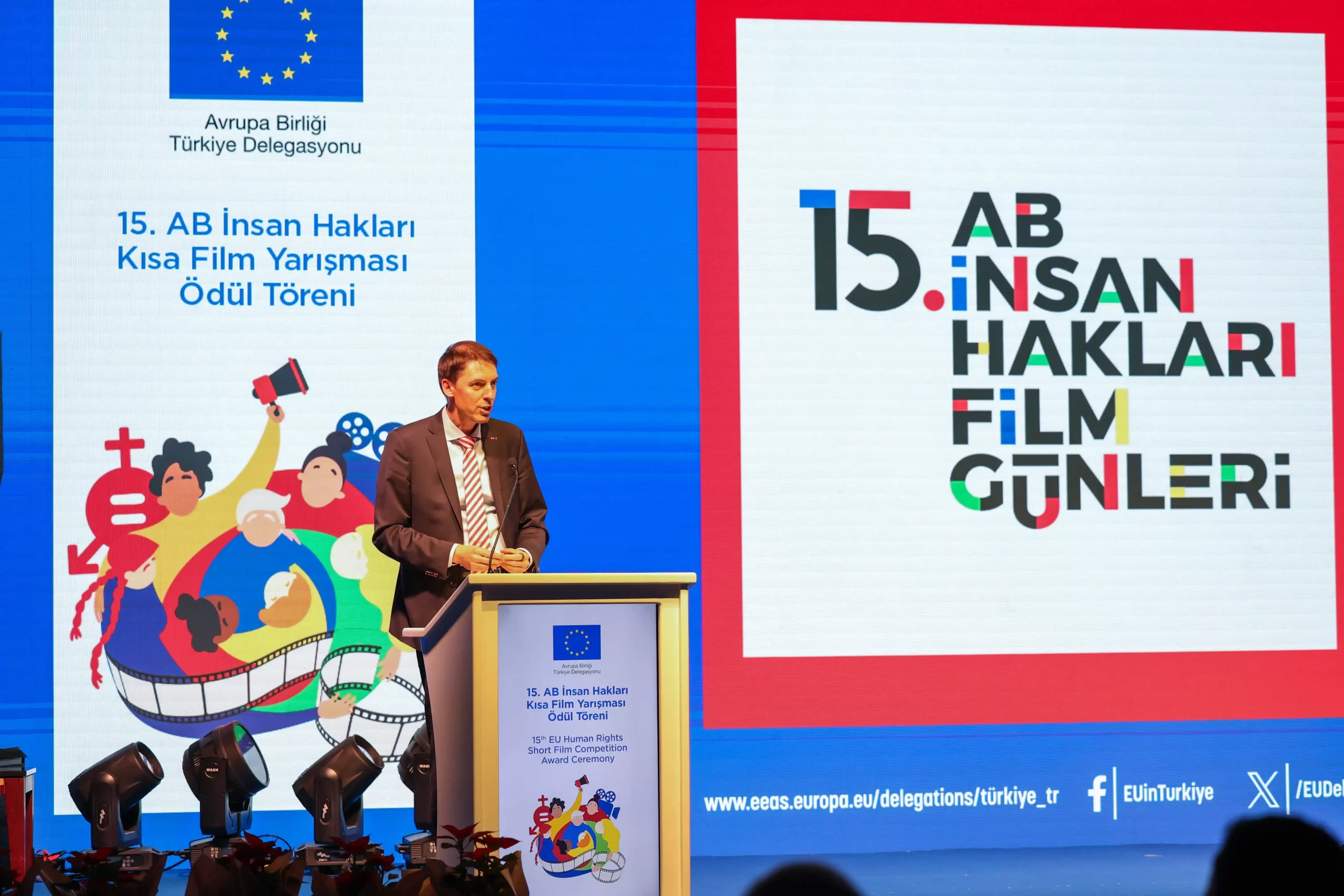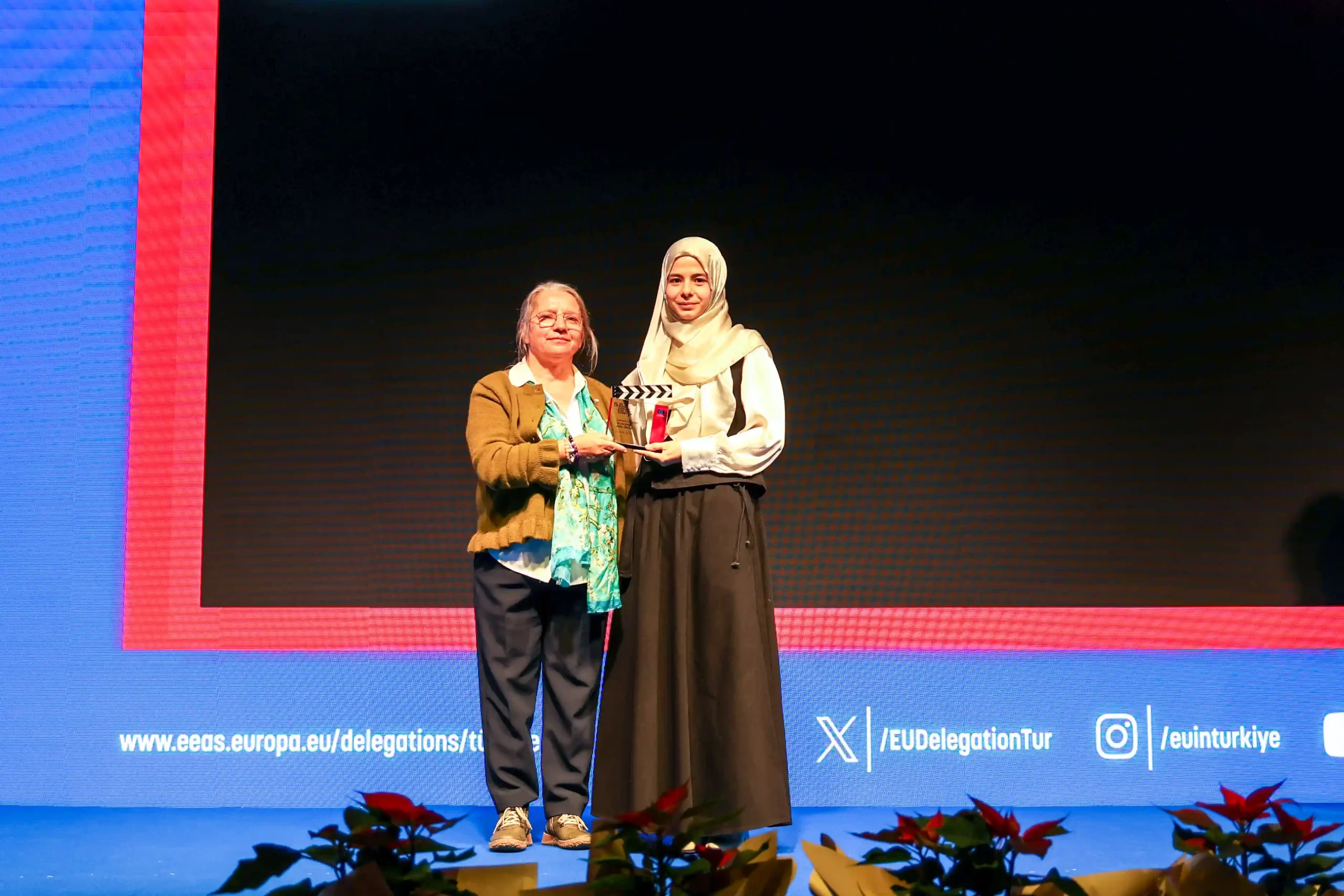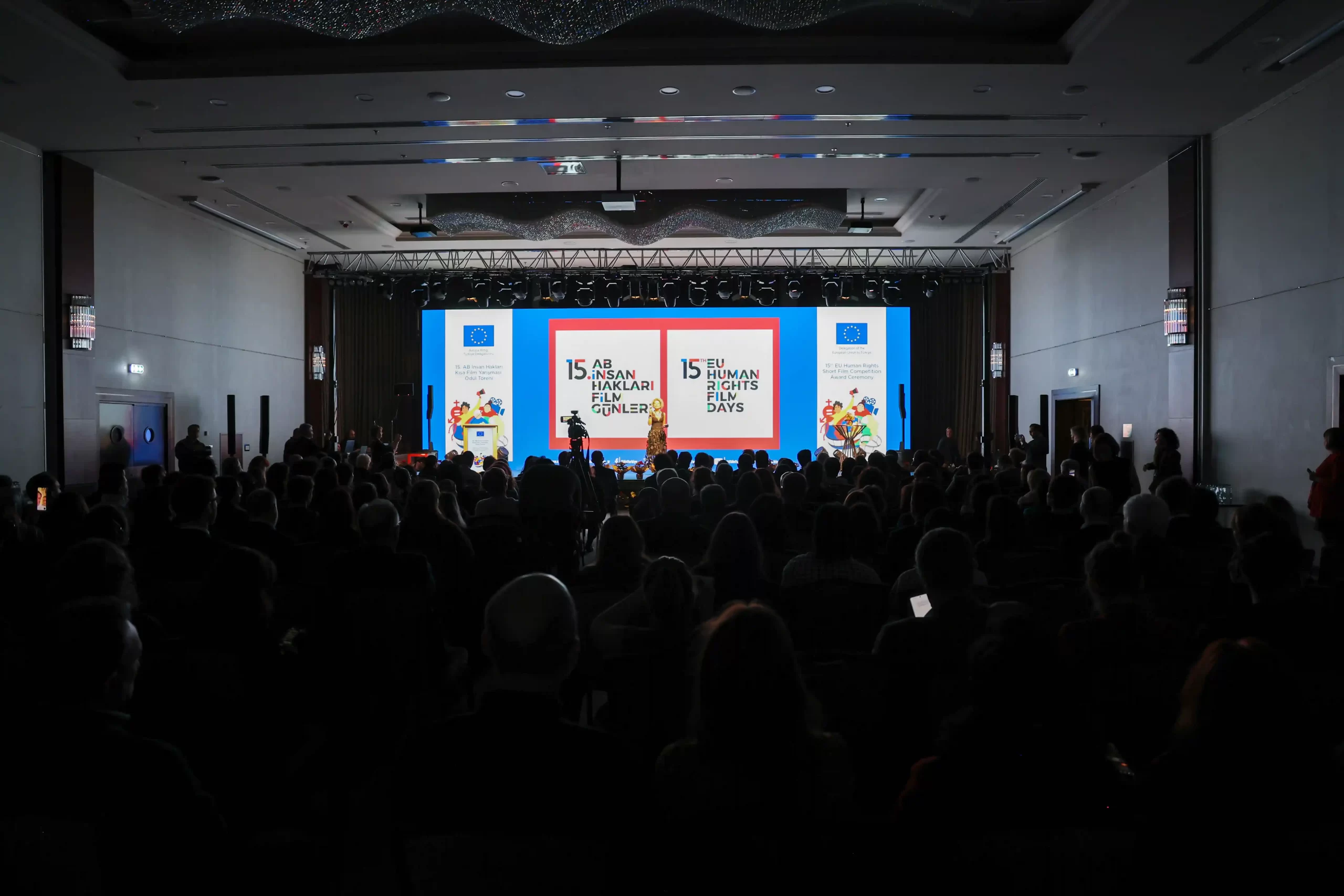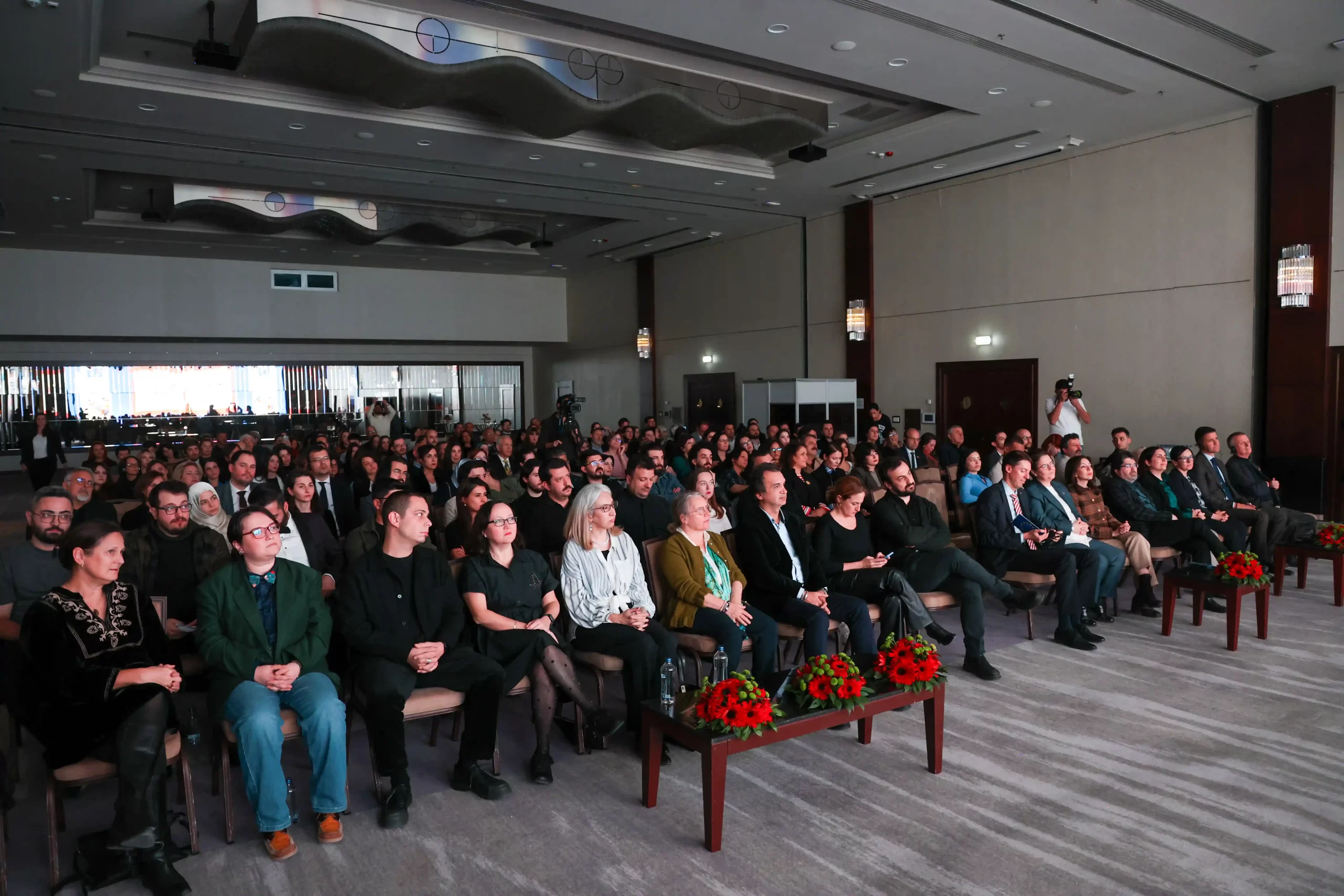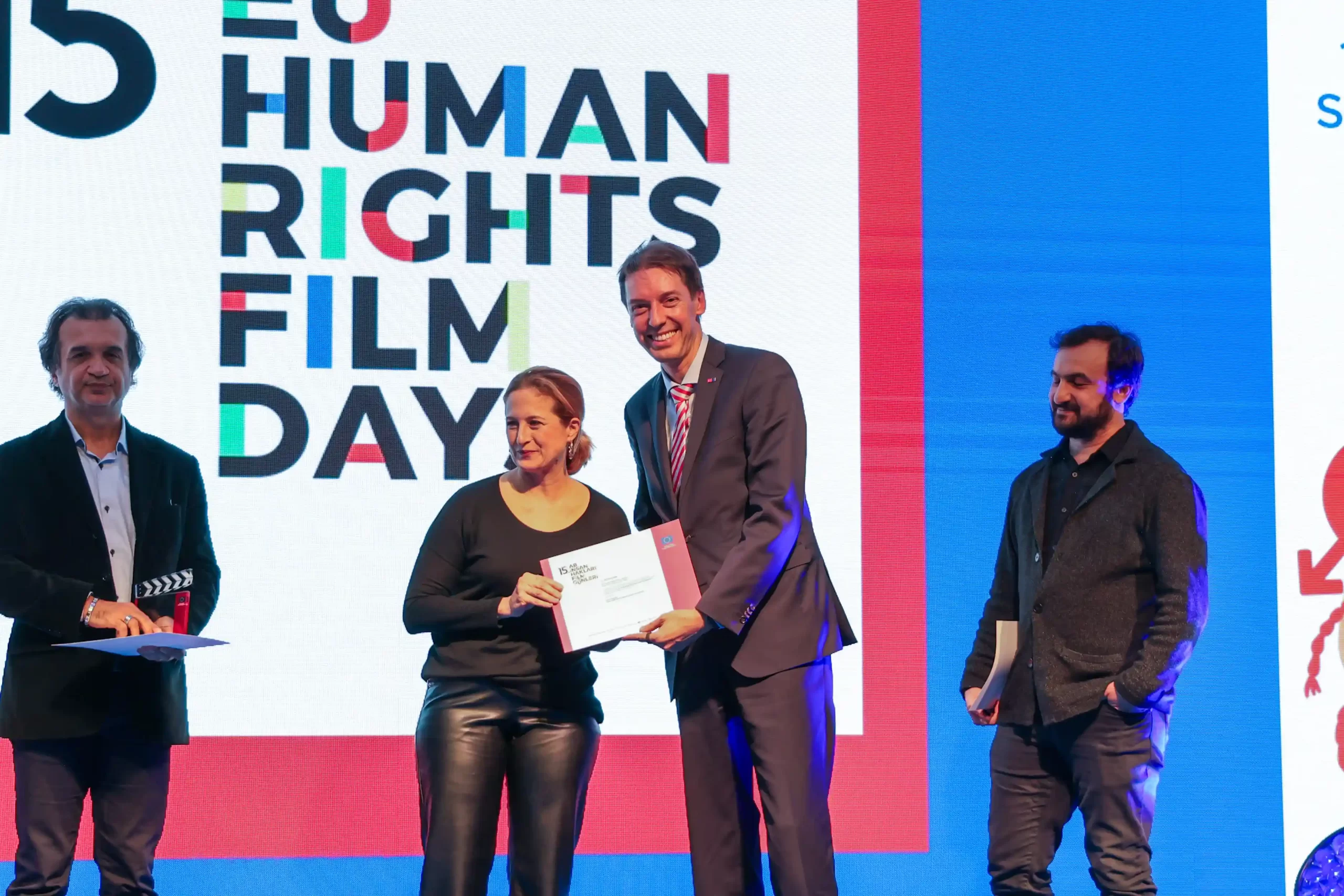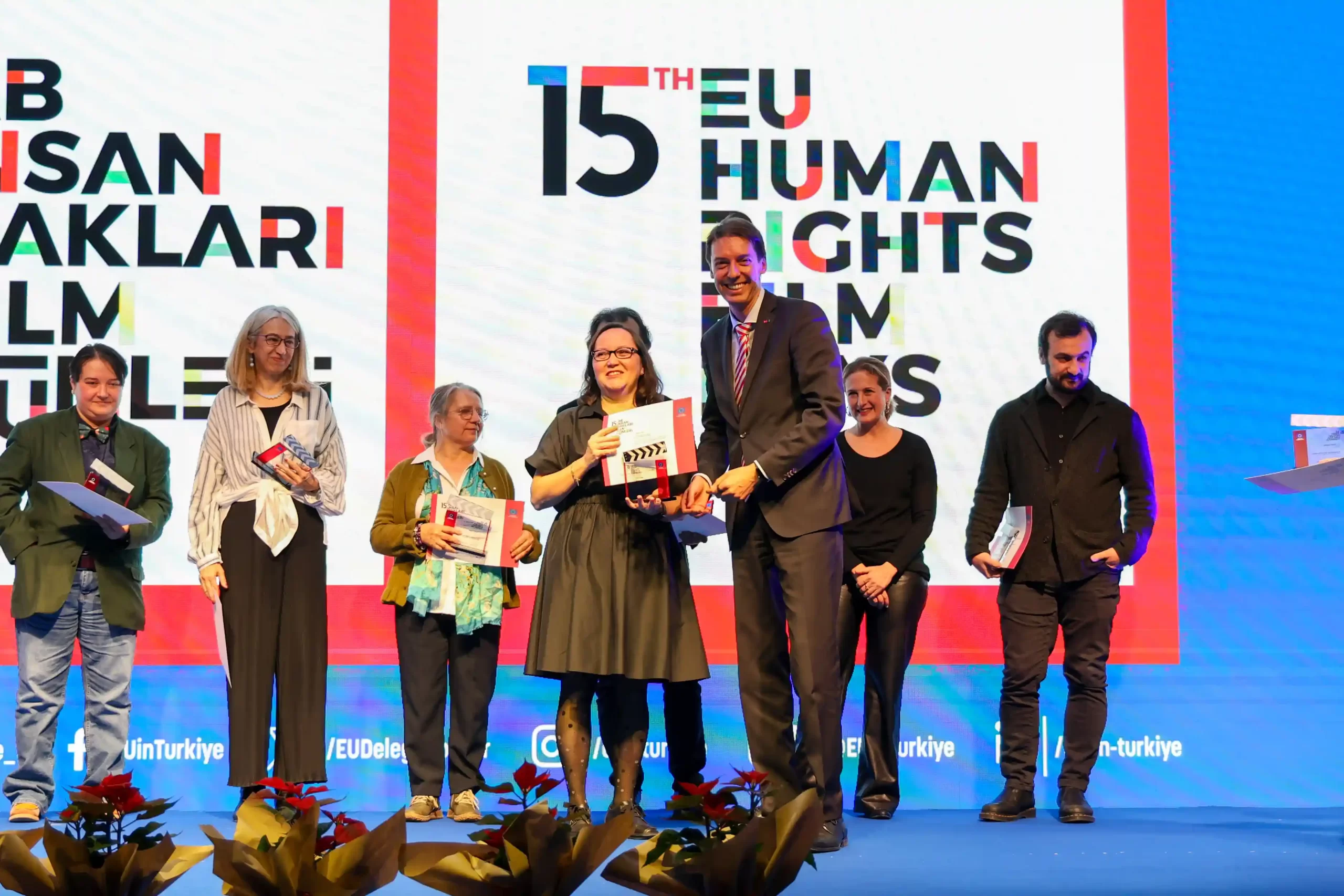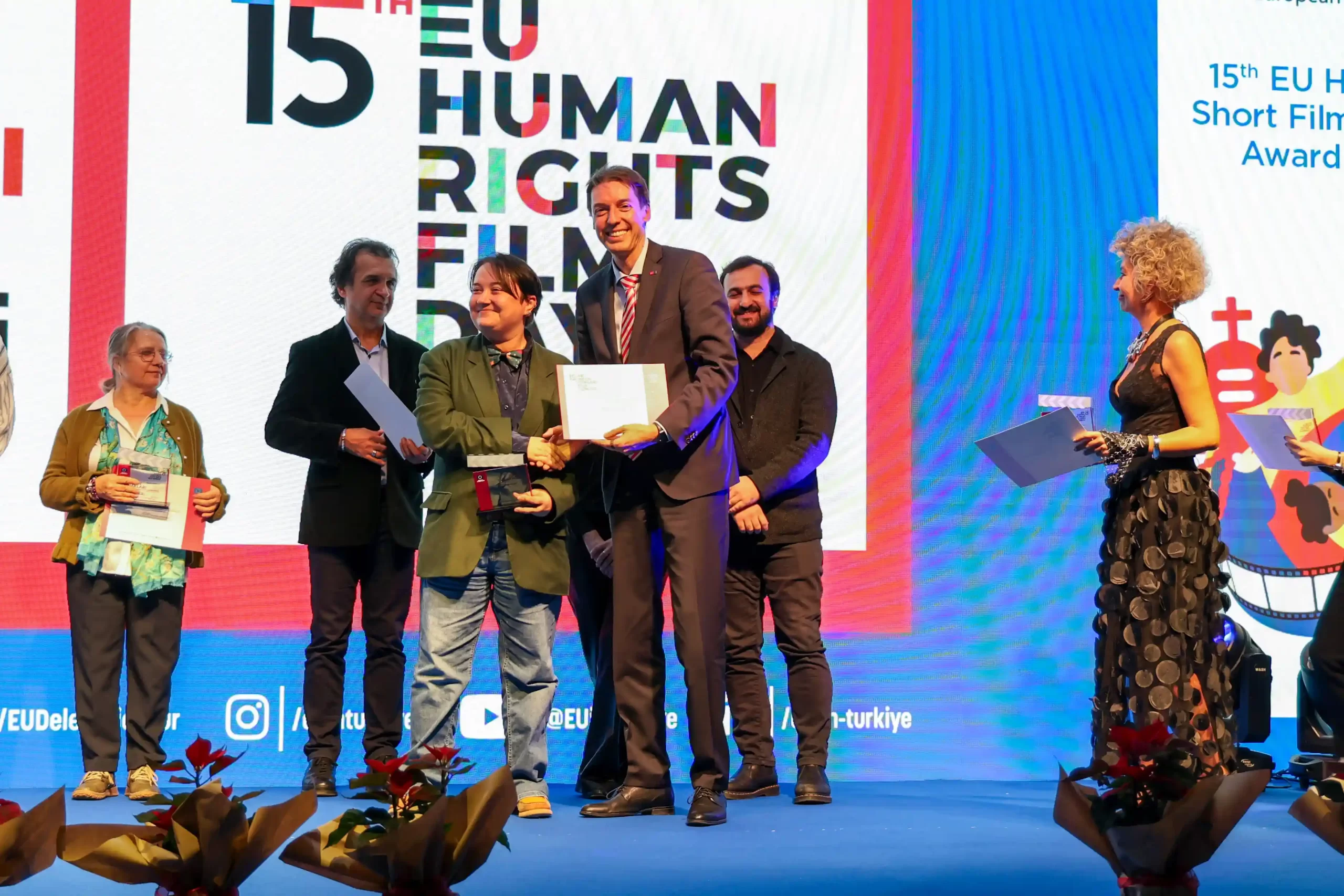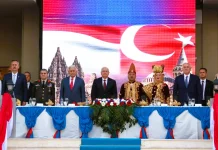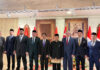
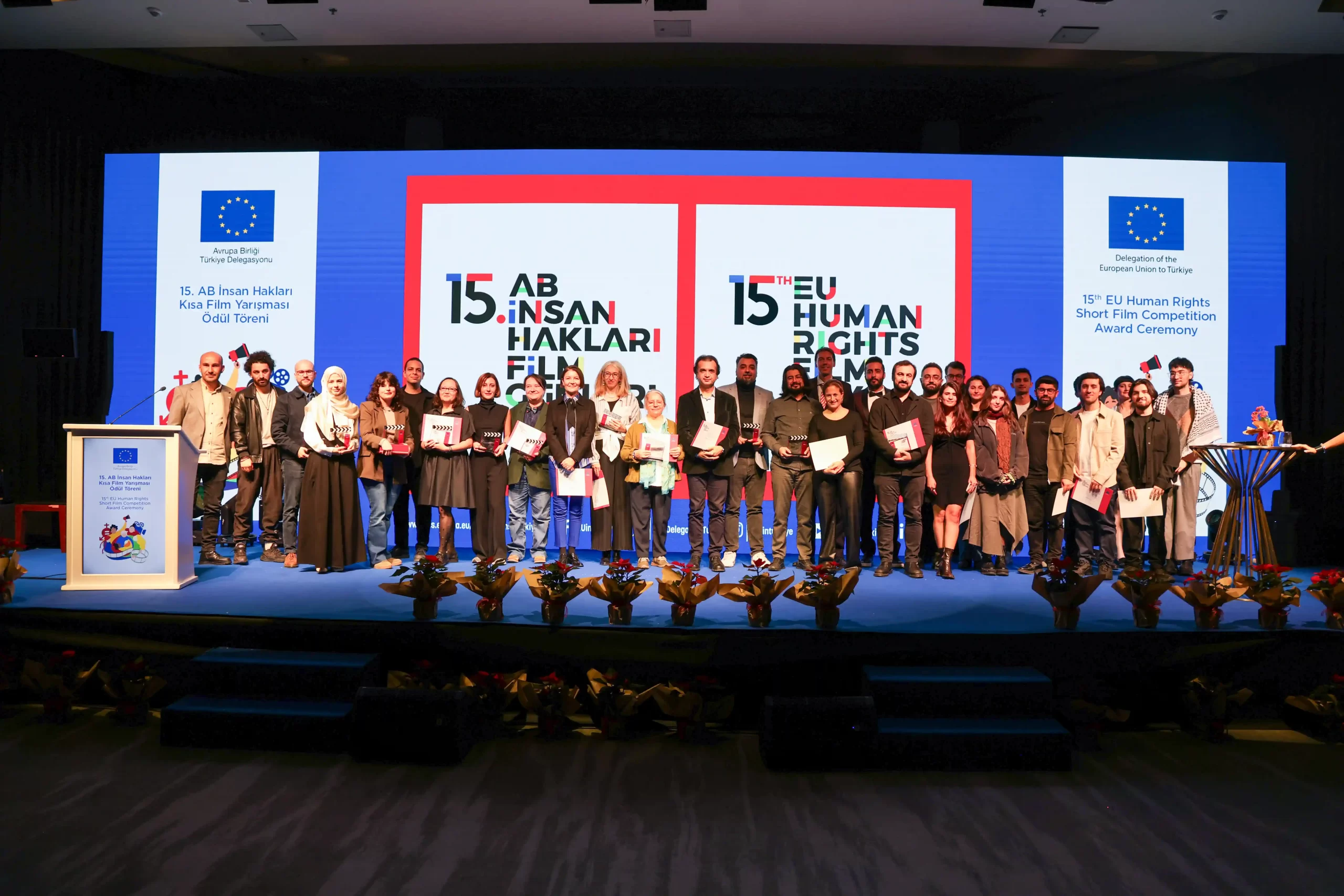
The European Union (EU) Delegation to Türkiye announced the winners of the 15th EU Human Rights Short Film Contest at a ceremony hosted by the Ankara Hilton Hotel. The jury honored seven films across three categories: Human Rights, Gender Equality, and the Climate Crisis.
FATİH ŞİŞMAN
Director Selman Nacar and actor Canan Ergüder, both jury members, told Nefes that Türkiye faces many urgent human rights challenges. That cinema offers a powerful way to make these realities visible.
AWARDS IN THREE CATEGORIES
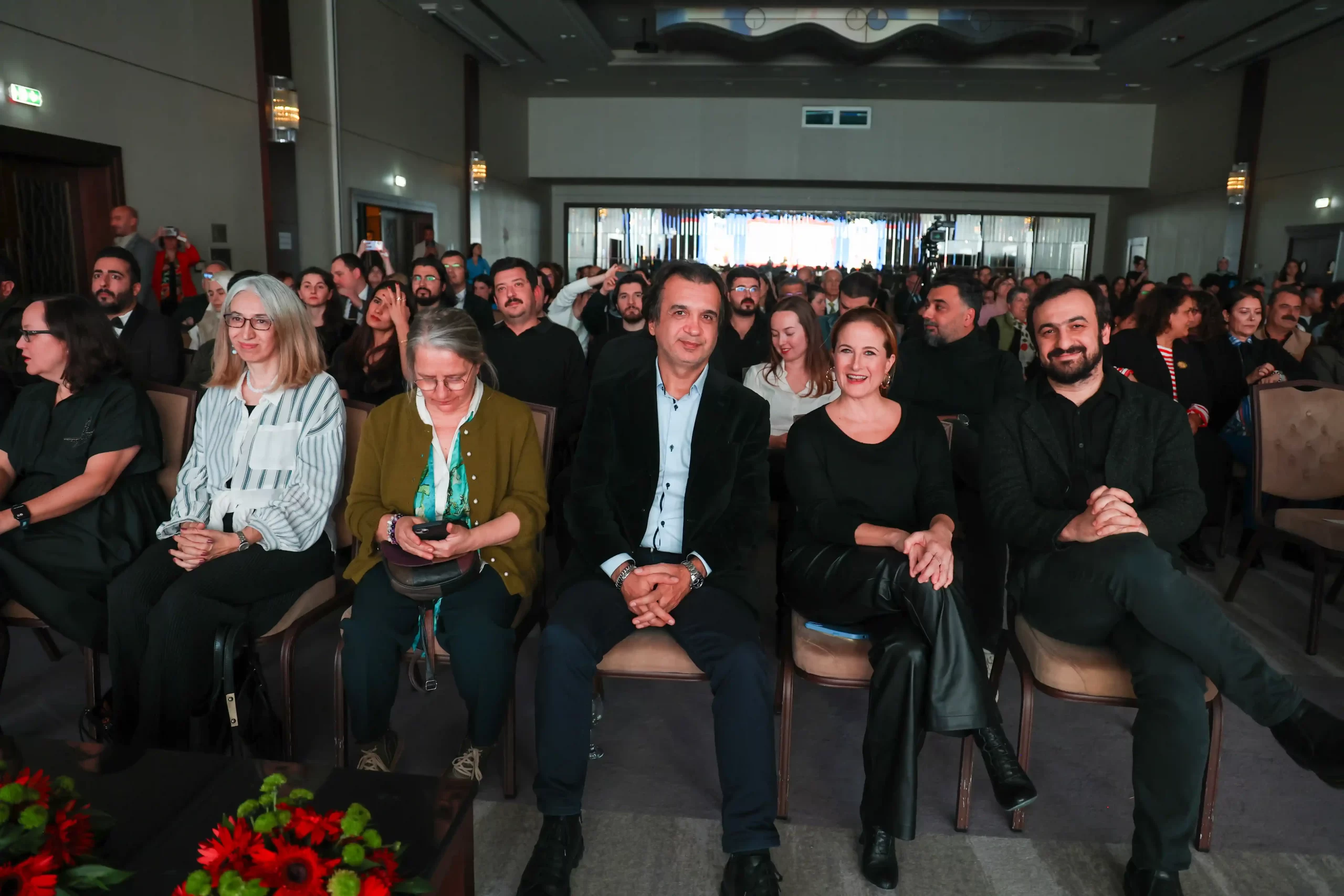 The jury, which included director Selman Nacar, actor Canan Ergüder, film critic and screenwriter Burak Göral, academic Ruken Öztürk, and journalist, author, and human rights activist Hacer Foggo, chose the award-winning films from 20 finalists.
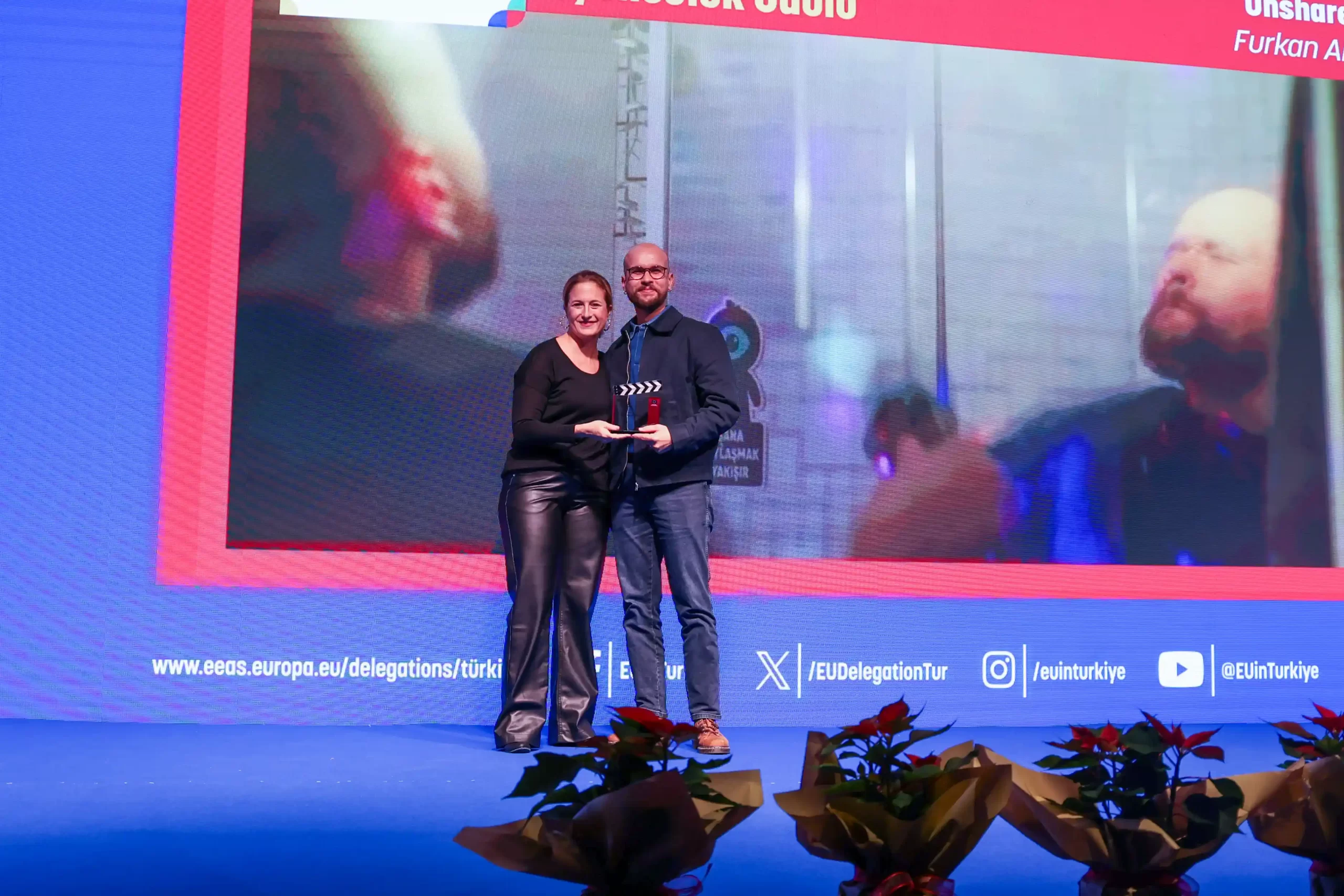
In the Human Rights category, Miray Kuyumcu won first prize with 326. Serhat Boylu took second with Koçer, and Furkan Akarsu placed third with Paylaşılamayan. The jury gave its special award to Özgür Kelimeler, Gazzeli Bir Şair by Abdullah Harun.
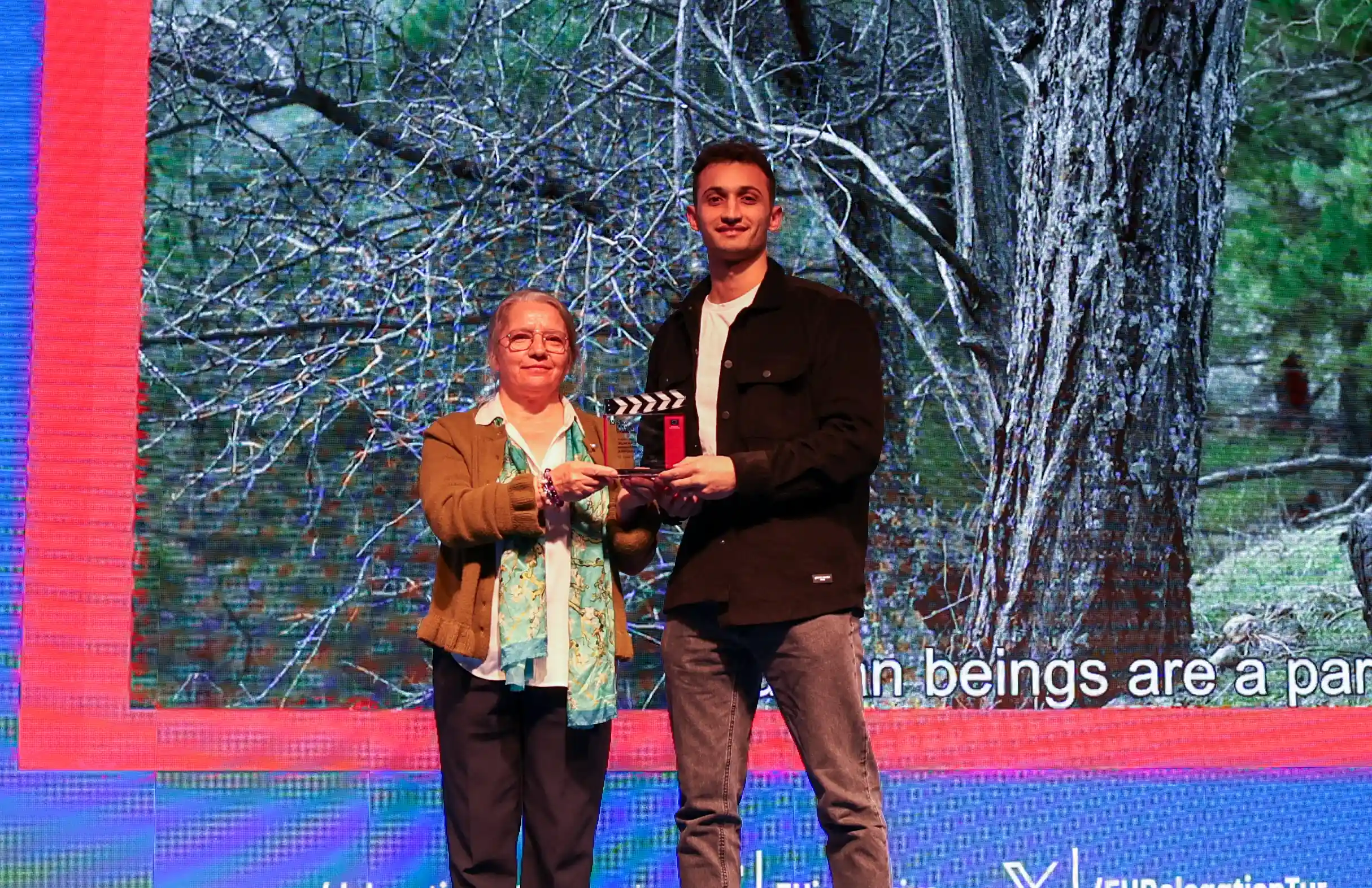
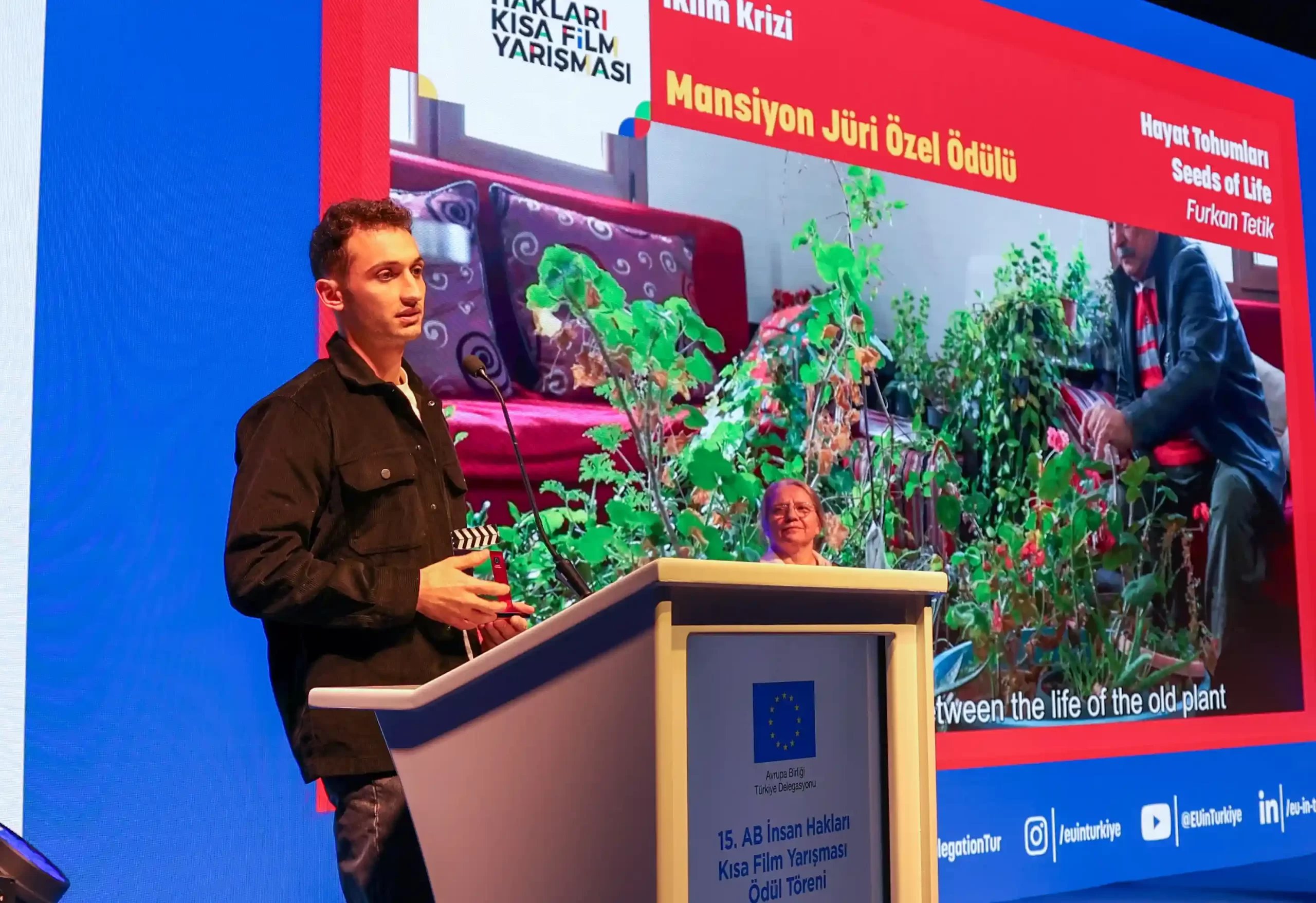
Zeynep Sıla Demircioğlu received the Gender Equality Special Award for Göz Devirme Sanatı. Hamide Enise Aytekin won the Climate Crisis Special Award for Onlar, and Furkan Tetik received the Jury Special Award for Hayat Tohumları.
CINEMA AS A LANGUAGE OF RIGHTS
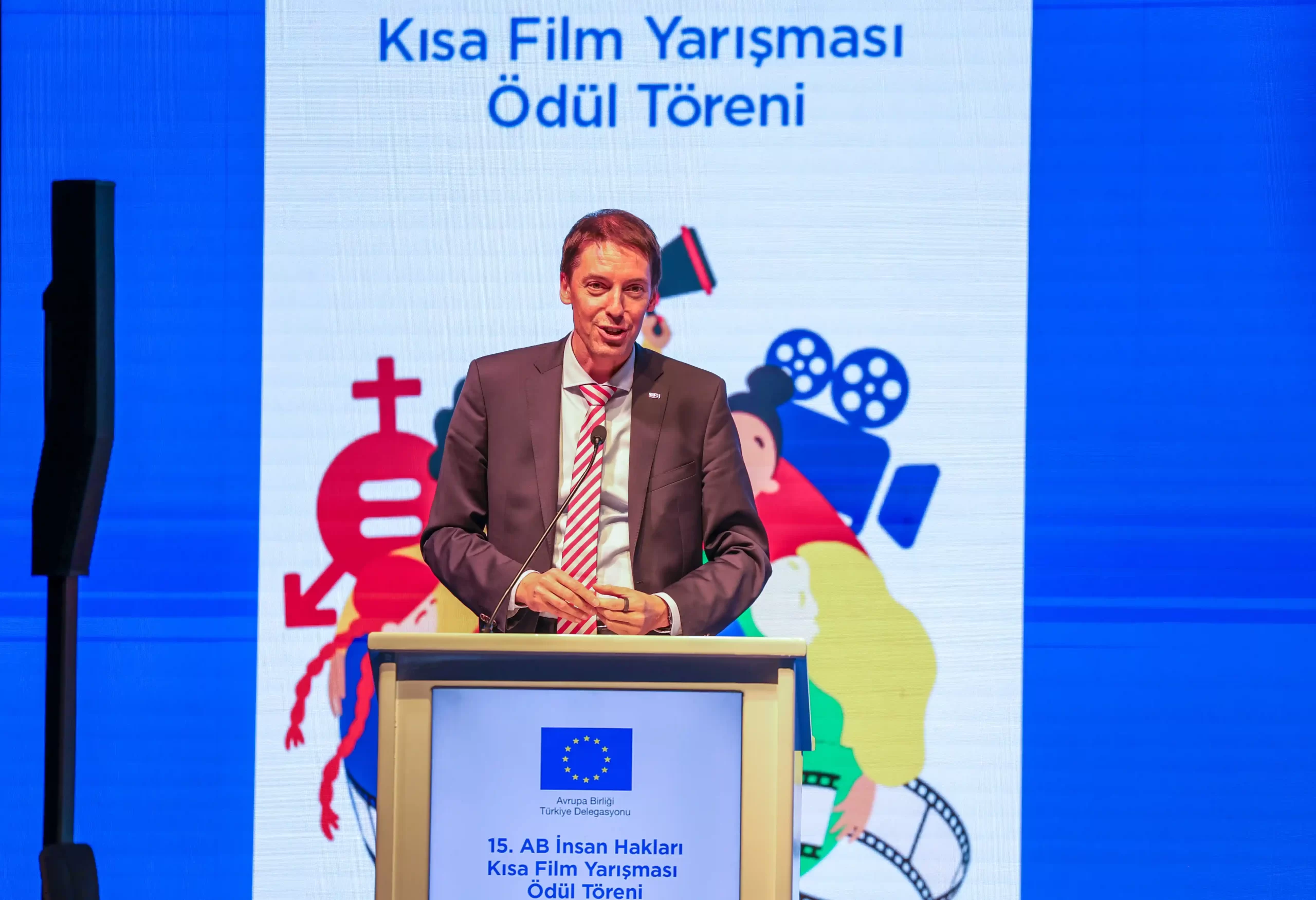
In his opening remarks, Jurgis Vilčinskas, Chargé d’Affaires ad interim of the EU Delegation to Türkiye, highlighted cinema’s ability to bring human rights into public view. He said, “Human rights do not take shape only in laws or institutions; they live in real and often fragile moments that art brings to light. Cinema has a unique power to make these realities visible, and to help them resonate far beyond the screen. As the European Union, we will continue our determination to protect and strengthen these fundamental rights in every circumstance, and to stand with those who work to keep them alive.”
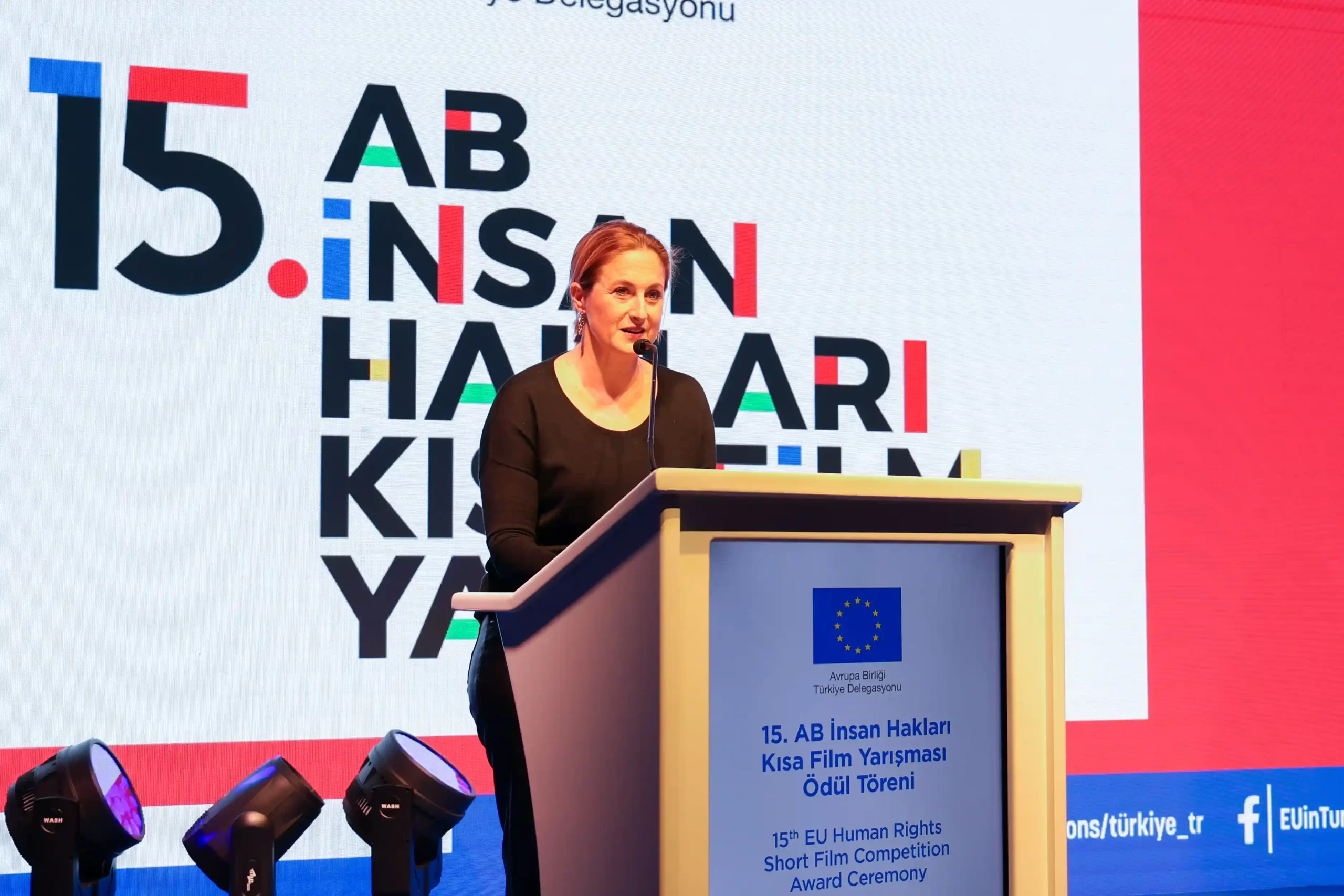
Actor Canan Ergüder said the jury encountered a wide selection, with different lives and different cinematic forms. “In fact, all the films relate to human rights,” she said. “We saw lives we did not know. For example, there were films about koçers. There was the story of a Gaza poet. There were many animations. Some were fiction, some were documentaries. Choosing was quite difficult, and we did what we could.”
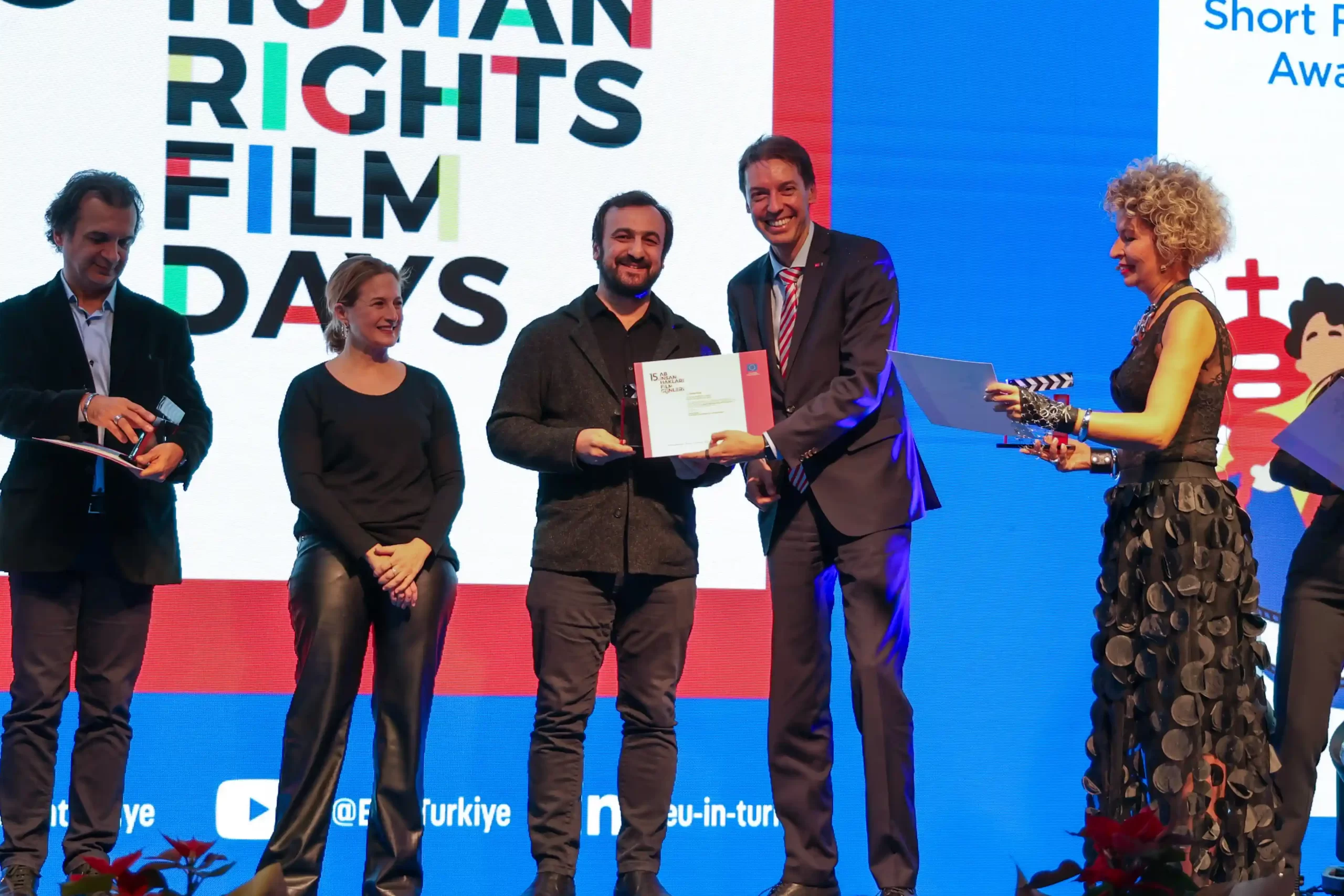
Director Selman Nacar described the jury’s approach as instinctive, while also being focused on craft. He said they first looked at whether a film moved them and what kind of experience it created, then tried to understand why it had that effect. “At the core, when you watch a film, you ask whether it affects you, how it makes you feel, what kind of experience it gives you,” he said. “Then you try to make sense of that experience. What made me happy was that all these issues were important. But films that spoke in distinct cinematic languages and styles, and used the craft with care and precision, had a special place for us. Because I believe how we tell a story, how we approach it, matters as much as the issue itself.”
Nacar added that the jury shared how each film touched them on a more immediate level before they tried to reach a common decision. “In the end, we talked about what kind of experience these films created for us, how they reached us,” he said. “Then we tried to agree on the films we would choose, and we settled on them together.”
He stressed the breadth of the human rights agenda and said no single topic can capture the full picture. “We cannot talk about one single issue,” Nacar said. “In that sense, we had a very diverse selection, and I find that very valuable. I also do not think one of the issues addressed is more important than the others. So we can say we have many issues.”