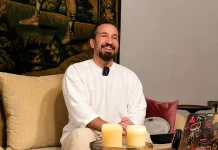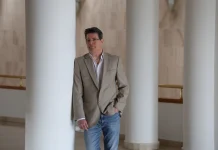

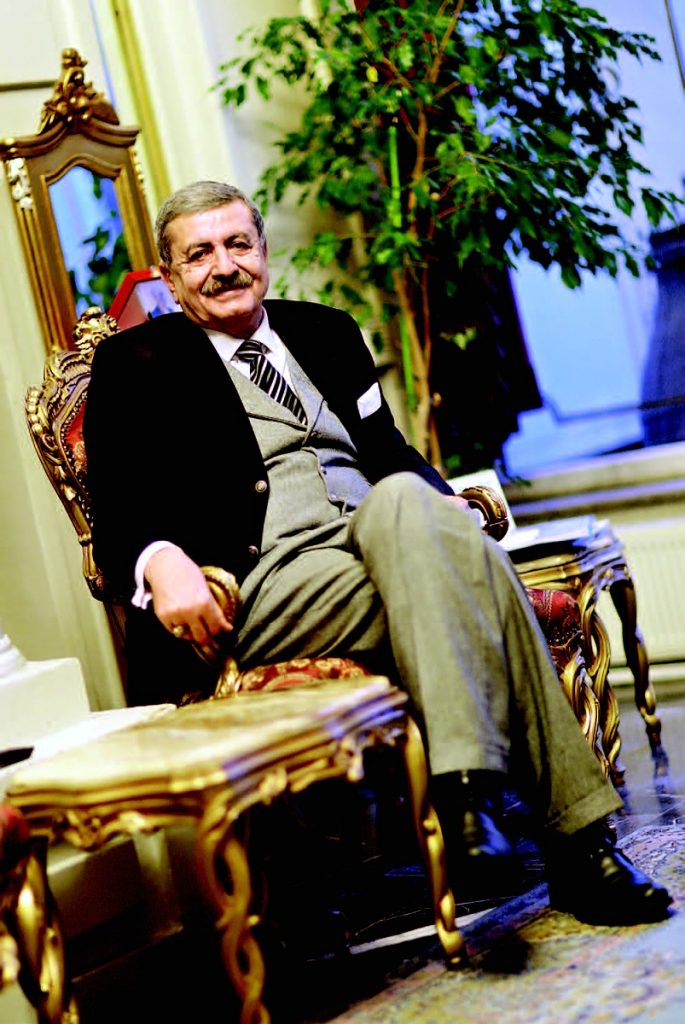
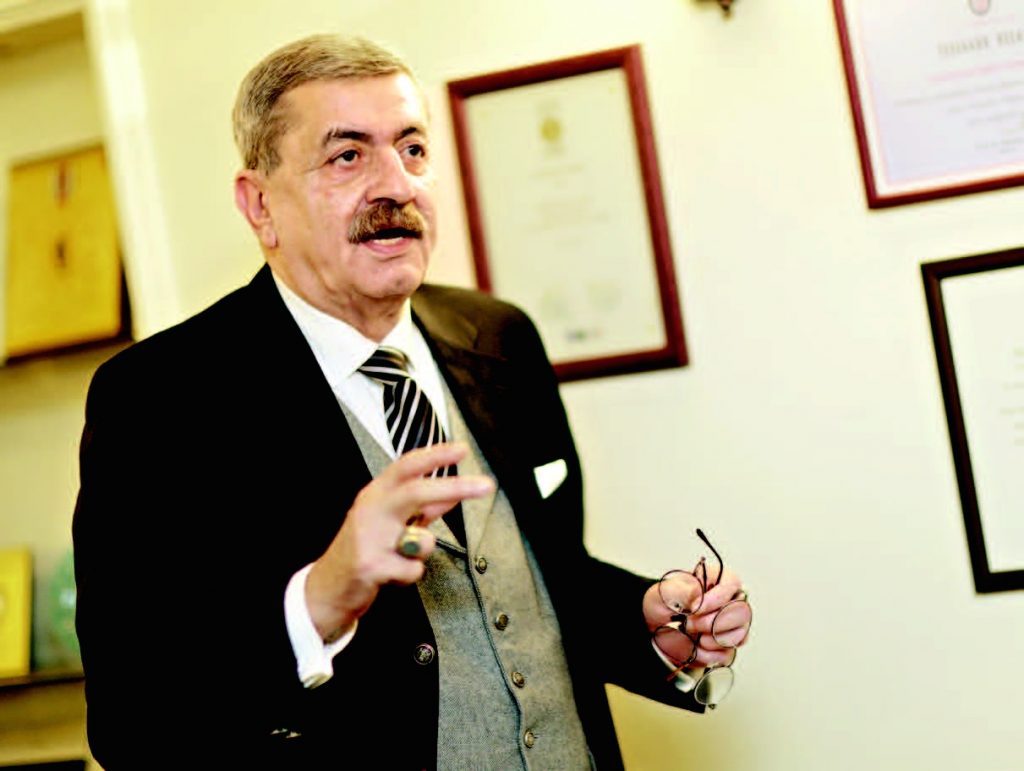
TURKISH JOURNALISTS’ ASSOCIATION CHAIR NAZMİ BİLGİN
Veteran journalist Nazmi Bilgin has led one of Türkiye’s most established press organizations, the Journalists’ Association, for 23 years. In an interview with us, he spoke about press freedom in Türkiye, the current state of journalism, the role of the association, and its “Press for Freedom” initiative.
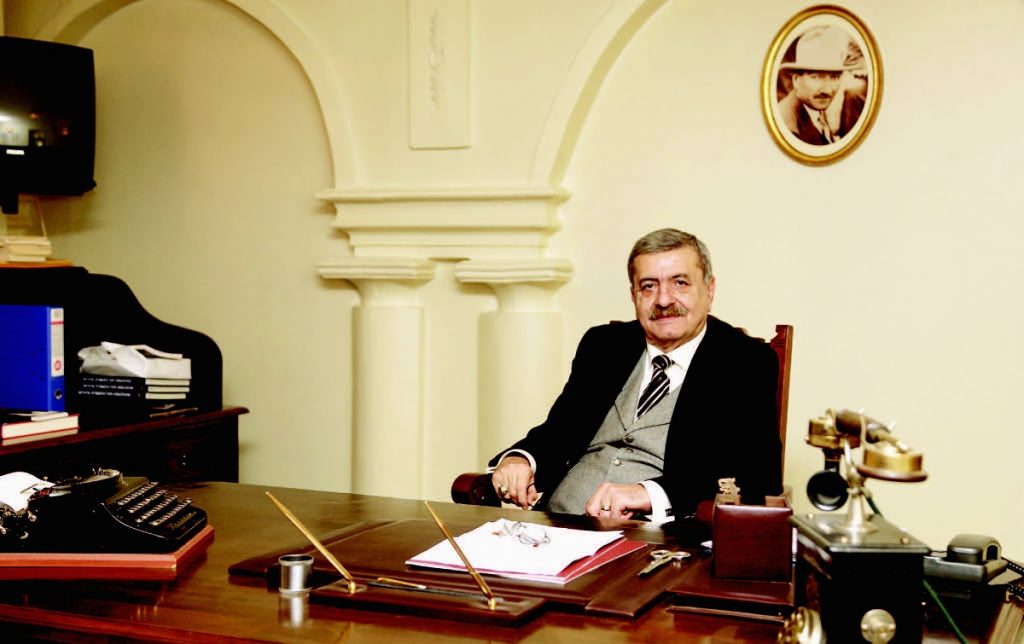
We met Bilgin at the association’s historic headquarters, where he said, “Democracy and press freedom are twins. One cannot survive without the other. Today, in terms of press freedom, Türkiye lags behind many countries that the public may not even be familiar with.”
By M. Ferhat Yüksel
Born in Erzurum, Nazmi Bilgin began his journalism career at Son Havadis while studying at the Istanbul University Academy of Economic and Commercial Sciences. Over a career spanning more than five decades, he has worked as a reporter, news director, chief parliamentary correspondent, and Ankara representative across leading national newspapers, television channels, and news agencies.
Bilgin has also held positions within the Turkish National Commission and served as a board member of the Press and Advertising Institution’s local board. He remains a member of the Board of Trustees of the Elele Foundation, operating under the Turkish Armed Forces.
Throughout his career, Bilgin has produced numerous influential reports and interviews. He was named “Journalist of the Year” in the news and interview category for five consecutive years between 1976 and 1981.
We spoke with Bilgin about the Journalists’ Association, which he has chaired for more than two decades, and the ongoing challenges facing press freedom in Türkiye.
Can you briefly talk about the history of the Journalists’ Association?
The Journalists’ Association was founded by Mekki Sahit Esen on January 10, 1946. It is the first press association in Türkiye. Esen described its purpose as bringing together journalists with free ideas and independent consciences under one roof, protecting the republic, and contributing to the survival of democracy, in line with Atatürk’s vision.
The association’s founding philosophy has largely remained intact. Today, it has more than 2,000 members holding official press cards. Before becoming chair in 1992, I served as deputy chair and secretary general.
What responsibilities does the Journalists’ Association take on, and what is its mission?
One of the association’s core missions is to uphold and protect the fundamental principles of the republic. For this reason, journalists from a wide range of political views are represented within the association. We encourage our members to leave their political opinions at the door and focus instead on professional issues and matters concerning the field of journalism.
Beyond this unifying role, the association provides in-service training for journalists who are new to the profession and offers social support in cases such as unemployment or bereavement. We also act as a consultative body when requested by the government on proposed changes to press legislation. For example, during the drafting of the most recent press and internet laws, we were invited to both main and sub-commissions, where we presented our views.
In addition, we provide financial support to students who are admitted to their first-choice communication faculties after the university entrance exams. One of the founders of Türkiye’s first Press and Broadcasting Academy, now a Faculty of Communication, is also a member of our association. This has allowed us to build strong and lasting ties with communication faculties.
What services and opportunities do you provide for members of the press?
We publish a daily newspaper, 24 Saat, where we offer employment opportunities to journalists who are currently out of work, based on need. We also continue to cover social security contributions for some of our colleagues so they can qualify for retirement, or provide them with staff positions that allow them to maintain their press credentials.
In addition to generating income for the association, the newspaper also serves as a platform for our members to contribute opinion columns and share their perspectives.
What are your activities on the international stage?
We organize journalist exchange programs with various countries from time to time. During the presidency of Bill Clinton and the visit of then–Prime Minister Bülent Ecevit, who was also a member of our association, it was decided that we would establish a sister partnership with one of the largest press organizations in the United States, the Press Club.
We maintain bilateral ties and partnerships with press associations in countries such as the United Kingdom, Germany, France, and Bulgaria. On certain issues, we publish joint statements with these organizations. At the international level, we exchange information and remain in close contact with our partner associations.
“PRESS FREEDOM HAS YET TO TAKE ROOT…”
As someone who has spent more than half a century in journalism, how do you assess the development of the press in Türkiye?
Throughout the Republic’s more than 90-year history, particularly after 1960, military interventions and periods of martial law disrupted the development of democracy. As a result, the conditions necessary for a free press to flourish were never fully established.
Toward the end of the 1950s, a former president of our association, Beyhan Cenkçi, was imprisoned for his views, as were many other journalists. One would hope that the imprisonment of journalists would remain a thing of the past. Unfortunately, that is not the case. There are still journalists today who have spent long periods in prison.
Democracy and press freedom have yet to take root in Türkiye fully. Democracy and press freedom are twins; one cannot survive without the other. Today, in terms of press freedom, Türkiye lags behind many countries that the public may not even be familiar with.
If this situation is to change, democracy must be upheld in its fullest sense. Labels such as “partisan press” and “parallel press” are being attached to journalists, and this is deeply troubling. Journalists are not partisan, parallel, or defined by such labels; they are independent. Those who adopt these labels cease to be journalists. When such individuals appear on television or write columns, it reflects poorly on the state of the press in Türkiye.
THIRD FROM LAST IN PUBLIC TRUST
How can the problem of bias and labeling be overcome?
First of all, politicians need to accept press freedom. I am not referring to insults; that is a separate issue and entirely unacceptable. But criticism must be tolerated. Journalists and politicians should not divide one another into “with me” or “against me.” Both sides need to avoid marginalizing each other and instead learn to coexist within a democratic framework.
According to a trust survey on occupational groups conducted by Hacettepe University, journalists ranked third from last. Politicians came last and, as he put it with a laugh, “they haven’t given up that spot to anyone else.” Lawyers ranked above politicians and ahead of journalists. This is a striking and thought-provoking result.
The issues we have discussed have eroded public trust in the profession. Yet the role of journalism is to present facts to the public in a realistic, objective, and impartial manner, distinguishing clearly between what is right and what is wrong.
PRESS FOR FREEDOM PROJECT
What are the goals of the EU-supported “Press for Freedom” project, which completed its first year in January 2015 and is carried out by the Journalists’ Association?
As part of the European Union’s “Think Civil” program, the Press for Freedom project is one of the most comprehensive initiatives in Türkiye aimed at identifying violations without political bias.
Within the scope of the project, five-member committees have been established in each of Türkiye’s seven geographical regions. These committees bring together local journalists, lawyers, civil society representatives, and academics. They monitor violations of press freedom and freedom of expression in their respective regions and prepare monthly reports.
At the national level, a central committee chaired by Prof. Dr. Korkmaz Alemdar compiles these regional reports into a consolidated monthly report. These are then summarized and published annually.
In addition, citizens from across Türkiye can contact us through our Violation Notification Line. When necessary, lawyers within the committees provide free legal consultation in cases involving alleged violations.
Further information about the Press for Freedom project, along with published reports, can be accessed at tr.pressforfreedom.org.
What activities is the Journalists’ Association carrying out regarding the rights and freedoms of media professionals?
Unfortunately, since the transformation that began in the 1980s with figures such as Asil Nadir, newspapers have gradually moved out of the hands of journalists and into those of business groups. During that period, media owners forced journalists to choose between keeping their jobs and joining a trade union. Naturally, most chose to keep working.
We must also acknowledge our own responsibility here. Journalists failed to show the level of resistance that was needed at the time. Had they stood together with unions instead of leaving them en masse, the landscape of journalism in Türkiye today might have been very different.
Today, journalists write about the importance of unionization for public employees, yet many are not union members themselves. We are fully aware of the challenges faced by journalists who lack job security. Unfortunately, there is still no strong, unionized structure within the press sector.
MONOPOLIZATION PROBLEM
How has the entry of business groups into the media sector affected the Turkish press?
Monopolization is the twin of censorship. When a large capital group acquires a media outlet, it becomes nearly impossible for that organization to challenge the government. In the absence of resistance, a dilemma inevitably emerges: which stories can be published and which cannot. That, in essence, is censorship.
There was a time when news directors kept lists of individuals who could not be criticized. We even dared to display such lists openly. In short, monopolization has become a serious and growing problem in Türkiye.
“THE REAL STORIES ARE STILL IN NEWSPAPERS”
How do you assess the impact of the internet and social media on the press?
Depending on who you ask, newspapers are expected to be replaced by the internet and social media within the next seven to 25 years. Similar predictions were made when television first emerged, yet that transition unfolded more gradually. Social media, however, is a much more disruptive force.
I want to underline one key point. Even if we assume that newspapers are 99 percent unreliable, social media, which operates without any form of editorial filtering, is effectively 100 percent unreliable. A newspaper story typically passes through multiple layers of verification, from editors to senior newsroom staff. On social media, by contrast, information is published instantly, often without any form of scrutiny.
As a result, false information can spread rapidly to thousands of people as if it were true. While this immediacy may appeal to those seeking fast updates, over time, readers tend to return to newspapers to verify the accuracy of what they have seen online.
In this context, the internet law currently under discussion, which I was involved in shaping, is of particular importance. Under the new regulation, online news platforms will become more institutionalized. They will be required to appoint a responsible editor, ensure that employees are formally insured, and will be eligible to apply for official press cards. In addition, these platforms will be able to receive a share of official announcements and advertising from the state.