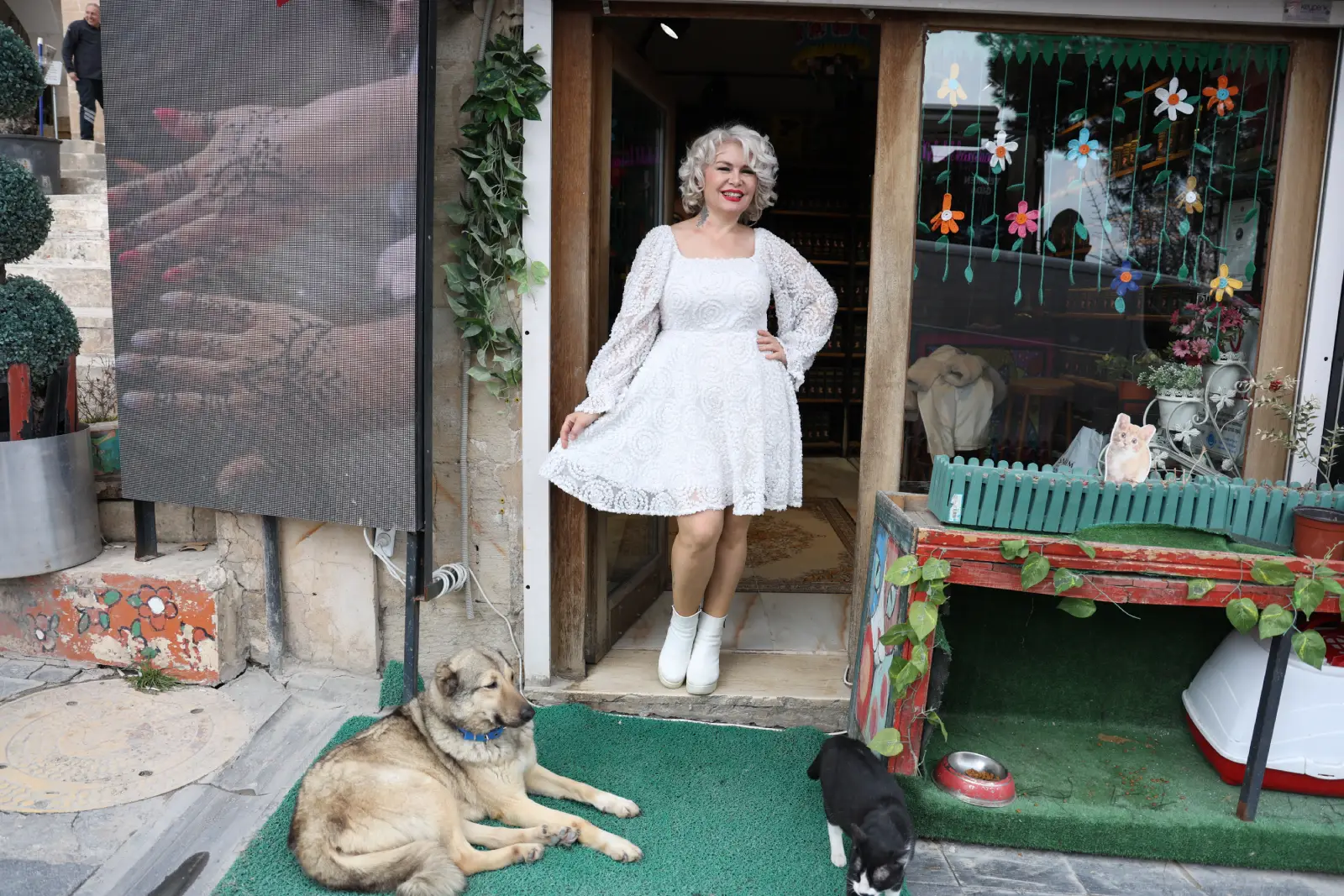
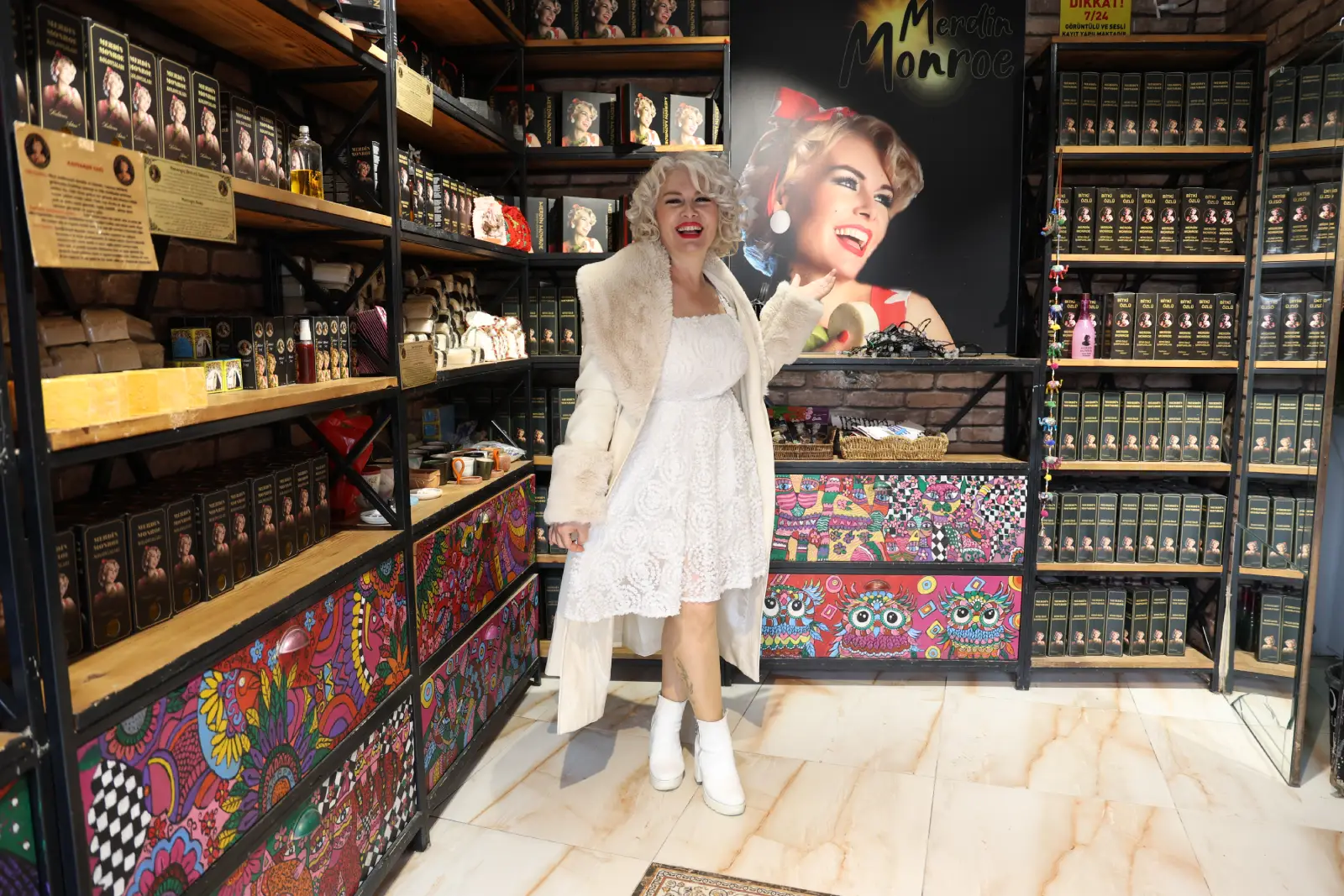
In a small shop on Mardin’s historic First Avenue, Melek Akarmut, known locally as the “Marilyn Monroe of Mardin,” has built a life around caring for stray animals. She funds this work by selling handmade soap produced from donkey milk, dedicating much of her income to feeding and treating cats and dogs living both in her home and on the streets.
Akarmut, who says she has long documented violence against animals, has faced legal consequences for doing so, receiving two prison sentences. “I hope that one day justice will truly work for innocent women, for children, and for stray animals,” she said.
For years, she has taken responsibility for dozens of animals, using the proceeds from her shop, which she opened about a decade ago, to support them. Over time, she has become known in the neighborhood as “the mother of cats.” While she once cared for dogs as well, she says that in recent years, many have been removed from the streets.
SOAP MADE FROM DONKEY MILK
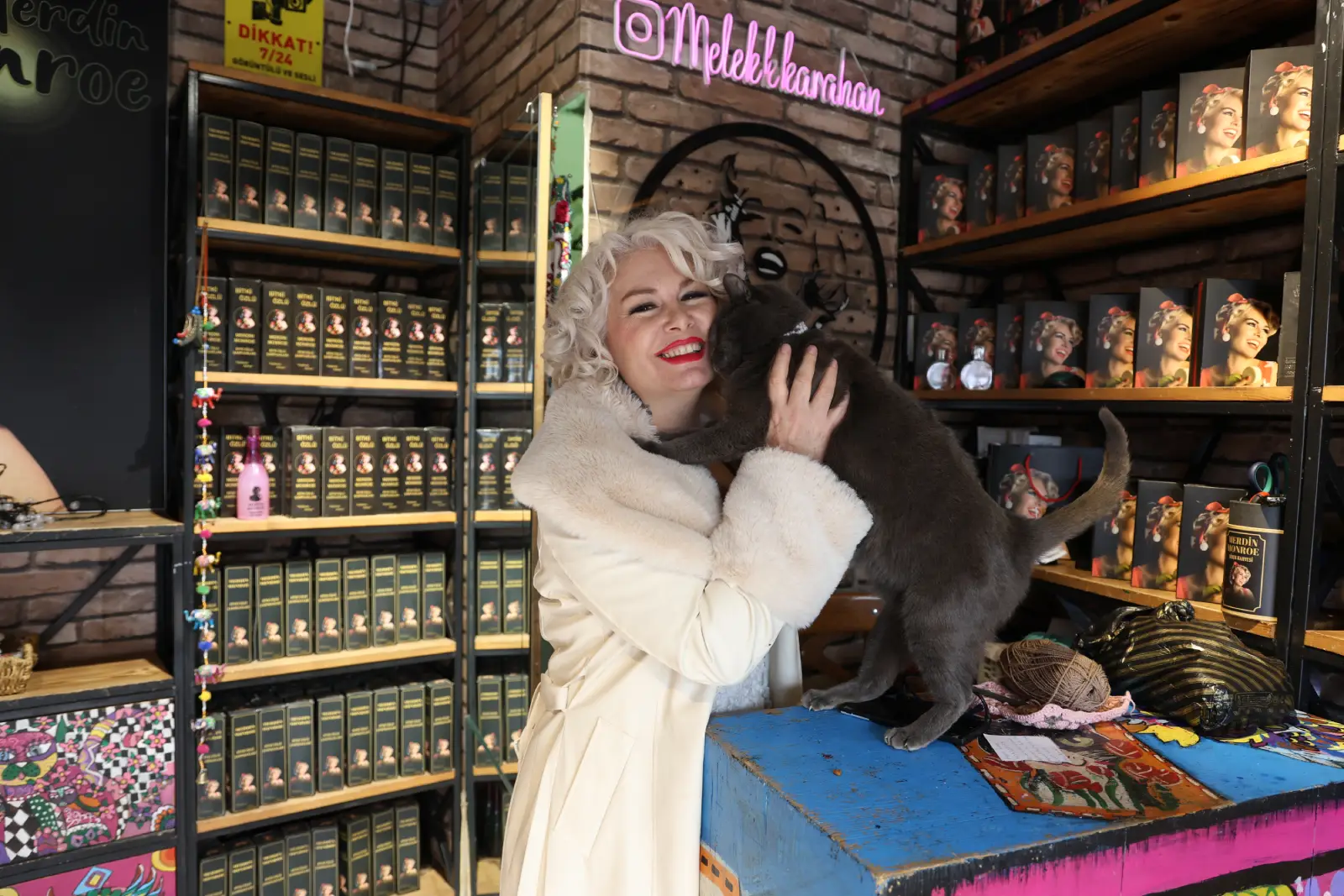
Akarmut says her most popular product is soap made from donkey milk, widely preferred for skincare. “It’s known as a beauty soap for the face,” she said, noting its effects on wrinkles, acne, and skin blemishes. “I milked the donkey myself and turned that milk into soap. I’m the only one doing this in Mardin and across the region, and I’m very confident about it.”
Now 51, she added with a smile, “I owe my beauty to donkey milk soap.”
A NAME THAT BECAME AN IDENTITY
The nickname “Mardin’s Marilyn Monroe” has its own story. Akarmut said she was unfamiliar with the iconic actress at first. “I didn’t even know who Marilyn Monroe was or how to pronounce her name. When I saw her photo, I just thought she was a very beautiful woman,” she said.
She noted that people once compared her to Yeşilçam star Filiz Akın, adding that her style carries a nostalgic influence. “I liked being compared to Marilyn Monroe. I was already planning to open a shop, so I decided to build the concept around that.”
She emphasizes that her appearance is not just an image but part of her daily routine. “I get ready every day, no matter what. Even if there’s no business, I have to come here because there are many cats and dogs in this area that depend on me.”
FAME WITHOUT FINANCIAL GAIN
Her shop has increasingly attracted the attention of tourists. Many visitors find her not by address, but by asking, “Where is Marilyn Monroe’s shop?”
Akarmut says this recognition has sometimes caused friction among nearby shopkeepers. “Some people don’t show my location or say I’ve moved away. But people still come out of curiosity,” she said.
Although she is now known beyond Türkiye, she says fame has not translated into financial gain. “My reputation has spread internationally, but it doesn’t bring me money. On the contrary, I spend more than I earn because I feel responsible for these animals.”
DOZENS OF ANIMALS UNDER HER CARE
Akarmut currently cares for a large number of animals both at home and in the surrounding area. Some of the cats she looks after cannot survive on the streets due to illness.
“At home, I have six sick cats. Some are blind, others have breathing problems. I also have kittens in storage that are growing up. There are around 40 cats in the back street, and another 20 to 25 nearby. I keep four or five cats inside my shop as well,” she said.
She once had three dogs but had to give two of them to a shelter during a period when she was imprisoned, as her husband struggled to care for them alone.
PUNISHED WHILE DEFENDING ANIMALS
Akarmut says she has faced legal action for documenting and sharing cases of violence against animals. In one incident, she said her dog was struck by a vehicle whose driver fled the scene.
“I didn’t file a complaint, but the driver sued me,” she said. “During mediation, they demanded 100,000 lira. In the end, I received a two-year prison sentence. I turned myself in and spent a month in a closed prison.”
She added that she had previously received another sentence for filming a dog being beaten.
“I CRIED MOST FOR THE ANIMALS”
During her time in prison, Akarmut said her greatest concern was the animals she had left behind. “I cried every day thinking about them,” she said, adding that she tried to cope by treating the experience like a temporary camp.
“I AM ONLY THE MOTHER OF STRAY ANIMALS”
Despite criticism and hardship, Akarmut says she will continue caring for stray animals and hopes for stronger justice for both animals and vulnerable individuals.
“We see cases of violence against women and children every day. I have also been attacked, beaten, and threatened, but those responsible were not punished,” she said.
“I am simply the mother of stray animals. With my appearance, my shop, and whatever I earn, I try to support them. I hope that one day justice will truly prevail for innocent women, for children, and for stray animals.”