ARTISTS AT WAR
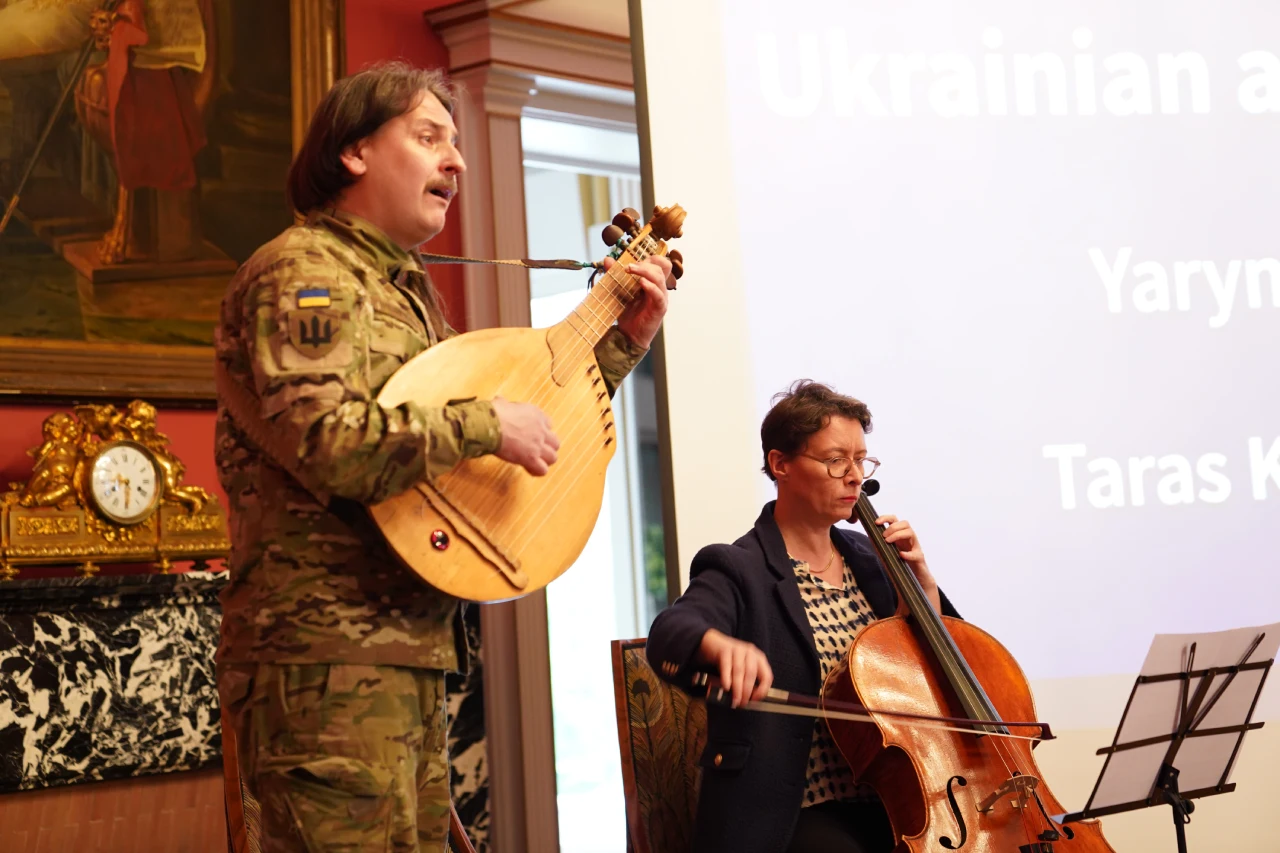
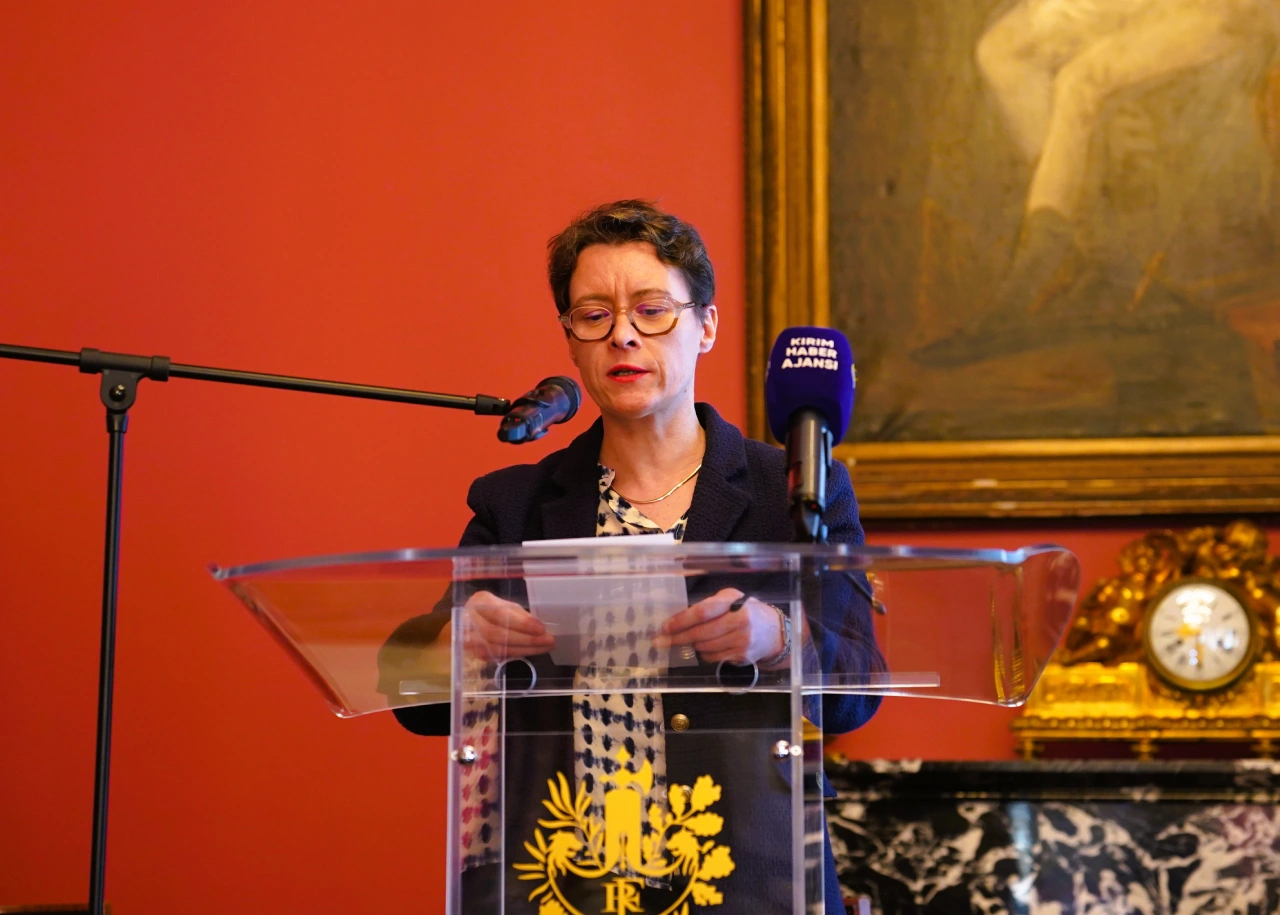
France’s Ambassador to Ankara, Isabelle Dumont, gave a short recital with Ukrainian artist Taras Kompaniçenko at an event titled “Ukrainian Artists in the Face of War,” held to mark the fourth year of the war between Russia and Ukraine. The traditional Ukrainian instrument bandura was played by Kompanichenko, while Dumont accompanied him on the cello. The Ukrainian song “Forget Me” was performed by the duo.
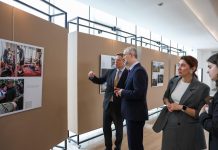
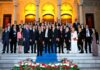
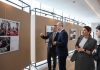
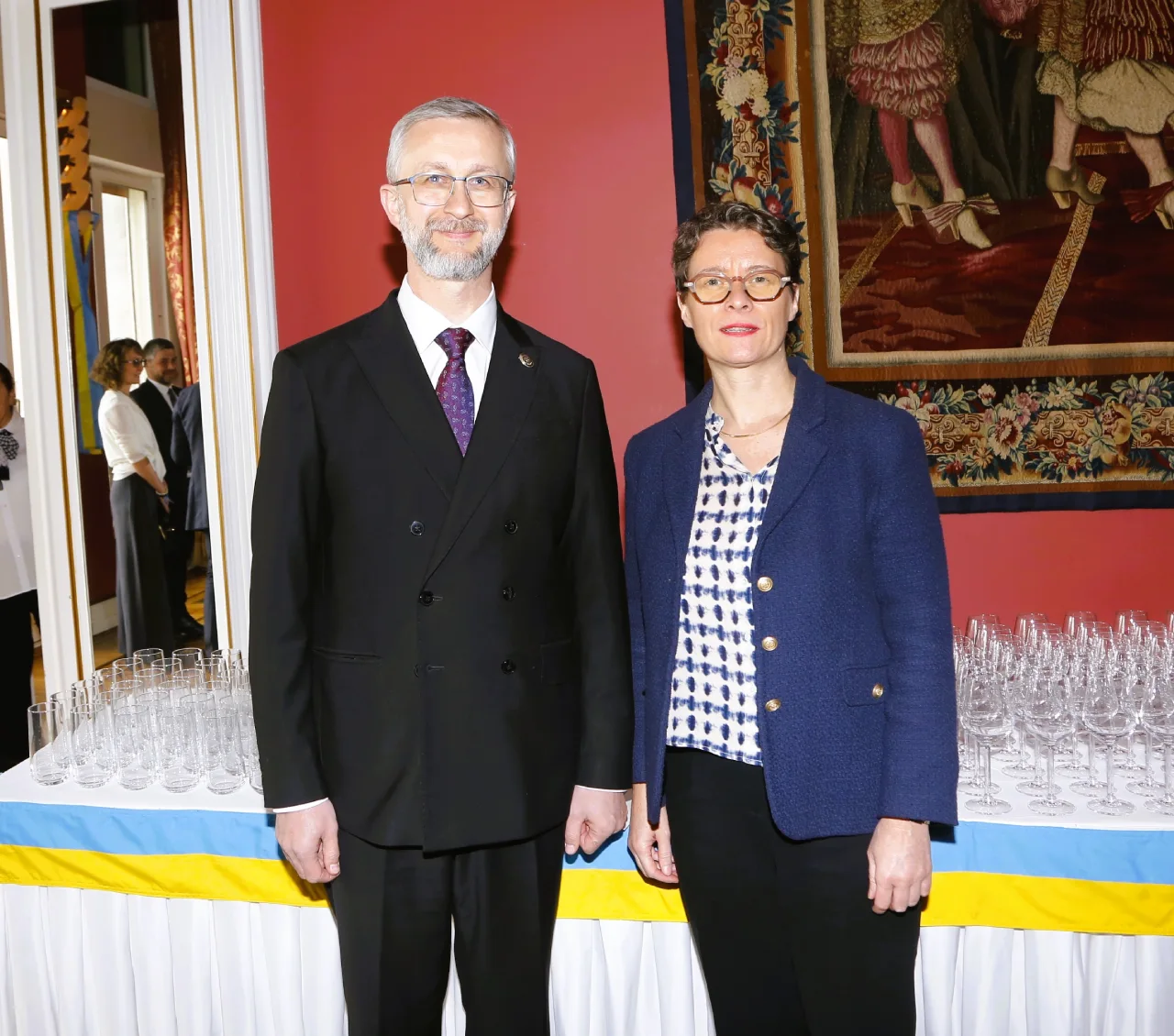
The event was hosted at the French Embassy on the fourth anniversary of the war. Ukraine’s Ambassador to Ankara, Nariman Celâl, was joined by numerous diplomats, ambassadors, and guests.
THEY WERE ONCE CIVILIANS
Emphasizing the severe consequences Ukrainians have faced for four years, Dumont said, “For four years, Ukrainians have endured forced displacement, deprivation caused by war, and the frequent pain of losing loved ones. These losses include not only soldiers who went to the front to defend their land, but also civilians targeted by bombardment.” It was stressed by Dumont that many of the soldiers fighting on Ukraine’s front lines today were teachers, workers, and ordinary civilians just a few years ago, and that this must not be forgotten.
ARMIES PROTECT LAND, CULTURE PROTECTS IDENTITY
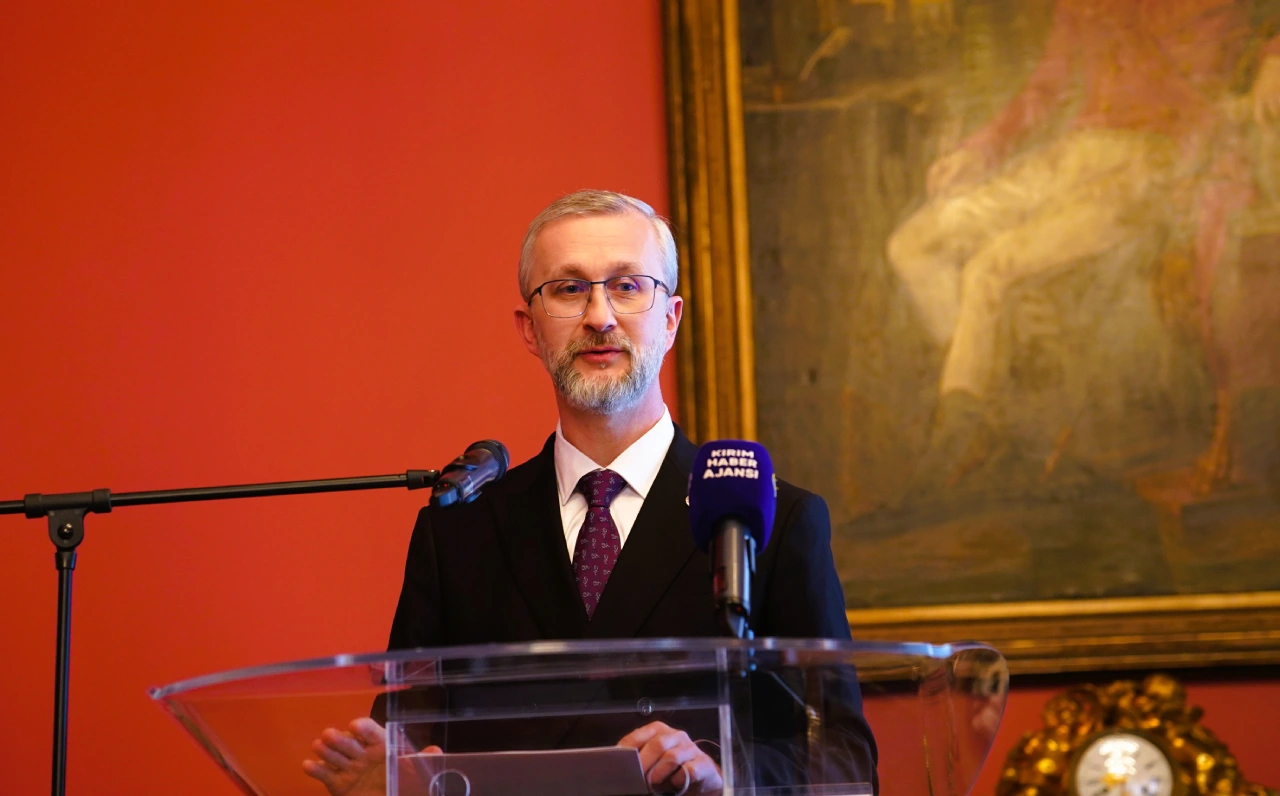
Ukraine’s Ambassador to Ankara, Nariman Celâl, said Russia’s full-scale invasion has targeted not only Ukraine’s territory but also its identity and culture. Ukrainian artists, he noted, have been turned into a voice of resistance throughout the war.
Stressing that Russia seeks to eliminate the Ukrainian state and erase the identity of its people, Celâl said, “Empires have always feared culture more than armies. Armies protect land, but culture protects meaning and identity.”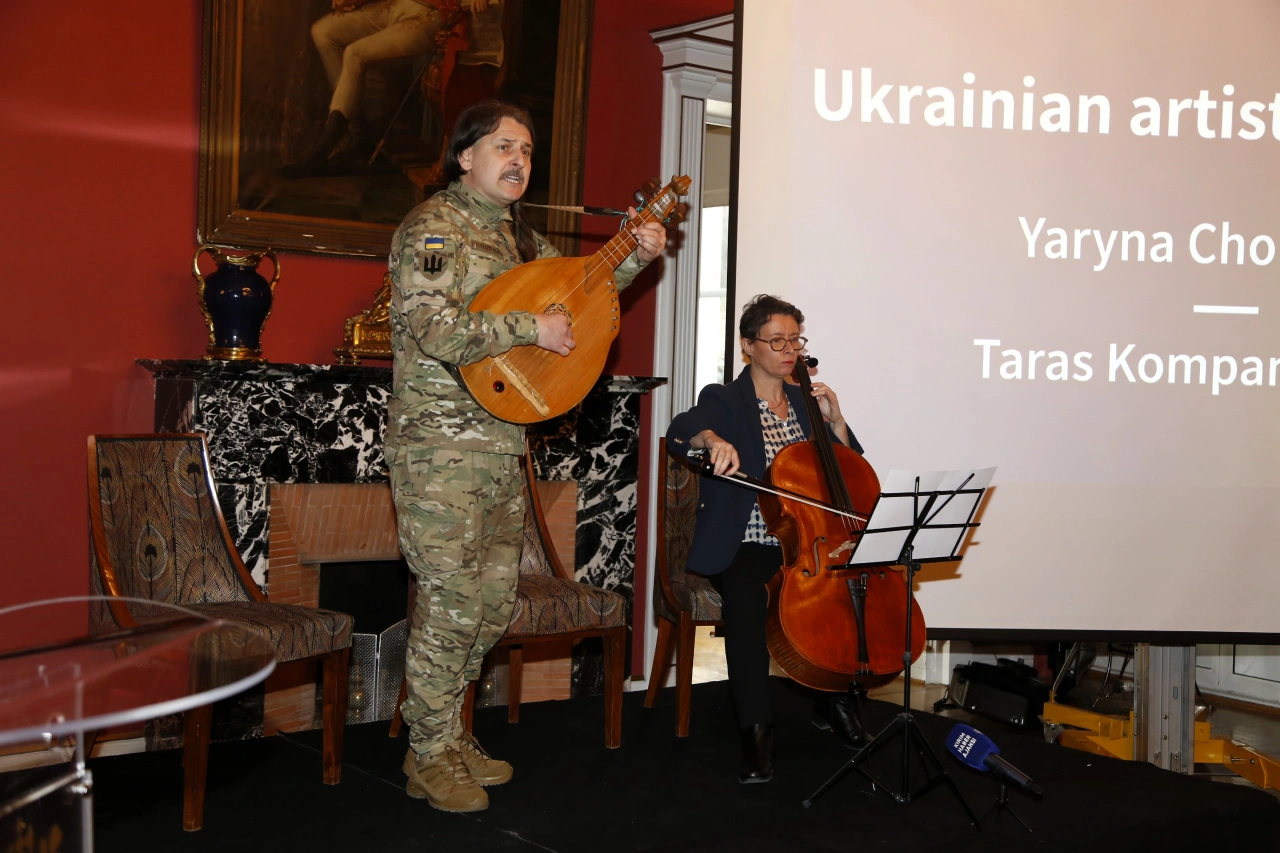
CELLO AND BANDURA DUET
After the speeches, traditional Ukrainian melodies were performed by Kompanichenko on the bandura, Ukraine’s national instrument. During “Forget Me,” he was accompanied on the cello by Ambassador Dumont.
SHE WROTE POEMS ON THE FRONT LINE
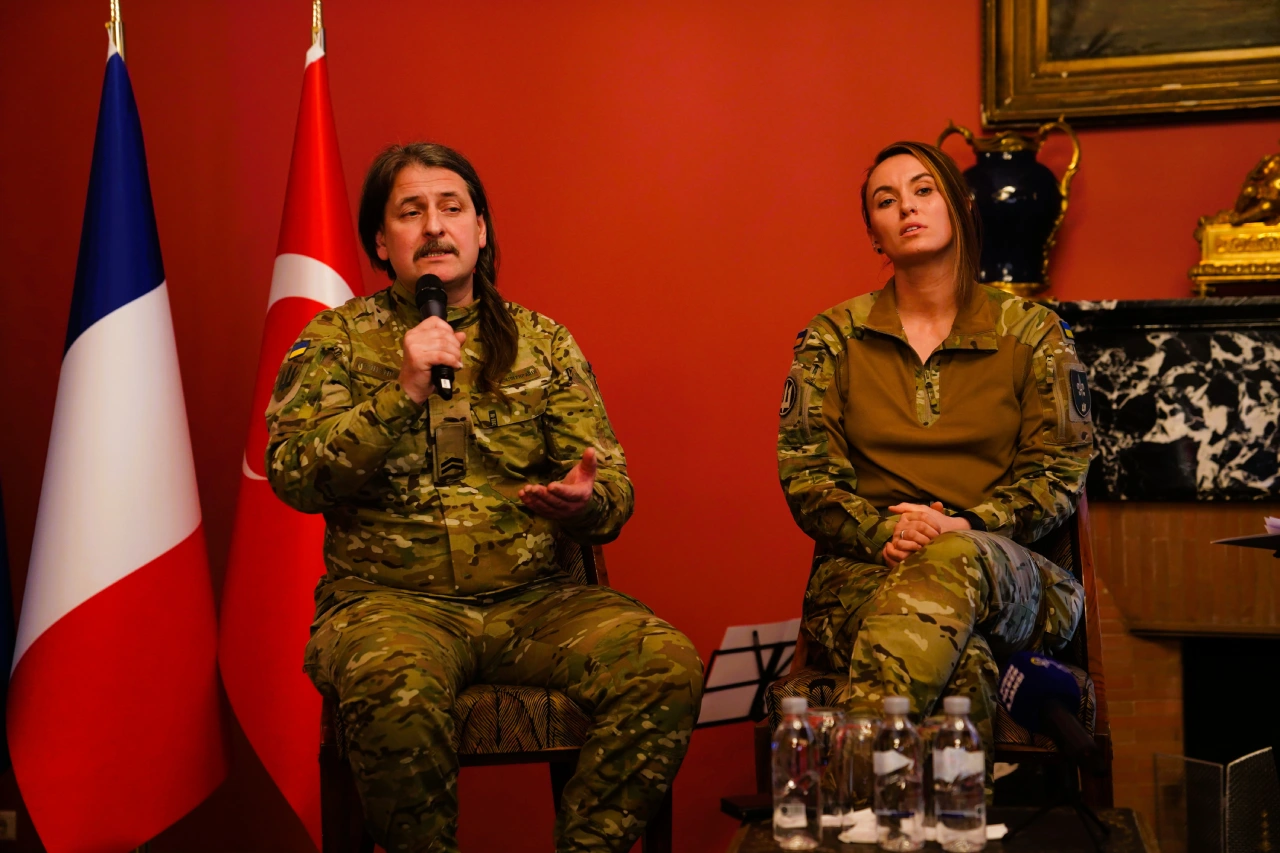
At the event, Kompanichenko, Ukrainian poet Yayna Chornohuz, who has served on the front line, shared their experiences. Chornohuz said her frontline experiences during Russia’s full-scale invasion of Ukraine formed the foundation of her poetry, adding that poetry can be used to bear witness to war and to keep the memory of those who were lost alive.
She said she served as a Marine and was deployed to the front with a reconnaissance unit when the invasion began. She noted that the nature of the war has changed over time. Trench warfare and conventional clashes were seen at the start, but today the war is largely conducted through unmanned aerial vehicles, and she now serves as a drone operator.
HIS WEAPON IS THE BANDURA
Kompanichenko said he sees himself first as a citizen rather than an artist and has used his art to strengthen national identity since Ukraine’s independence. When the war began, he decided to go to the front.
When he was accepted as a soldier, he said, his students and colleagues pointed to his bandura instead of a rifle and told him, “Your weapon is the bandura.” He said he was deeply affected by those words. Even so, he stressed that a direct responsibility was felt by him and that the importance of being on the front line was believed in.
The event concluded with a screening of the documentary “Culture vs War,” which focuses on the Ukrainian music group Antytila, whose members became soldiers in 2022.