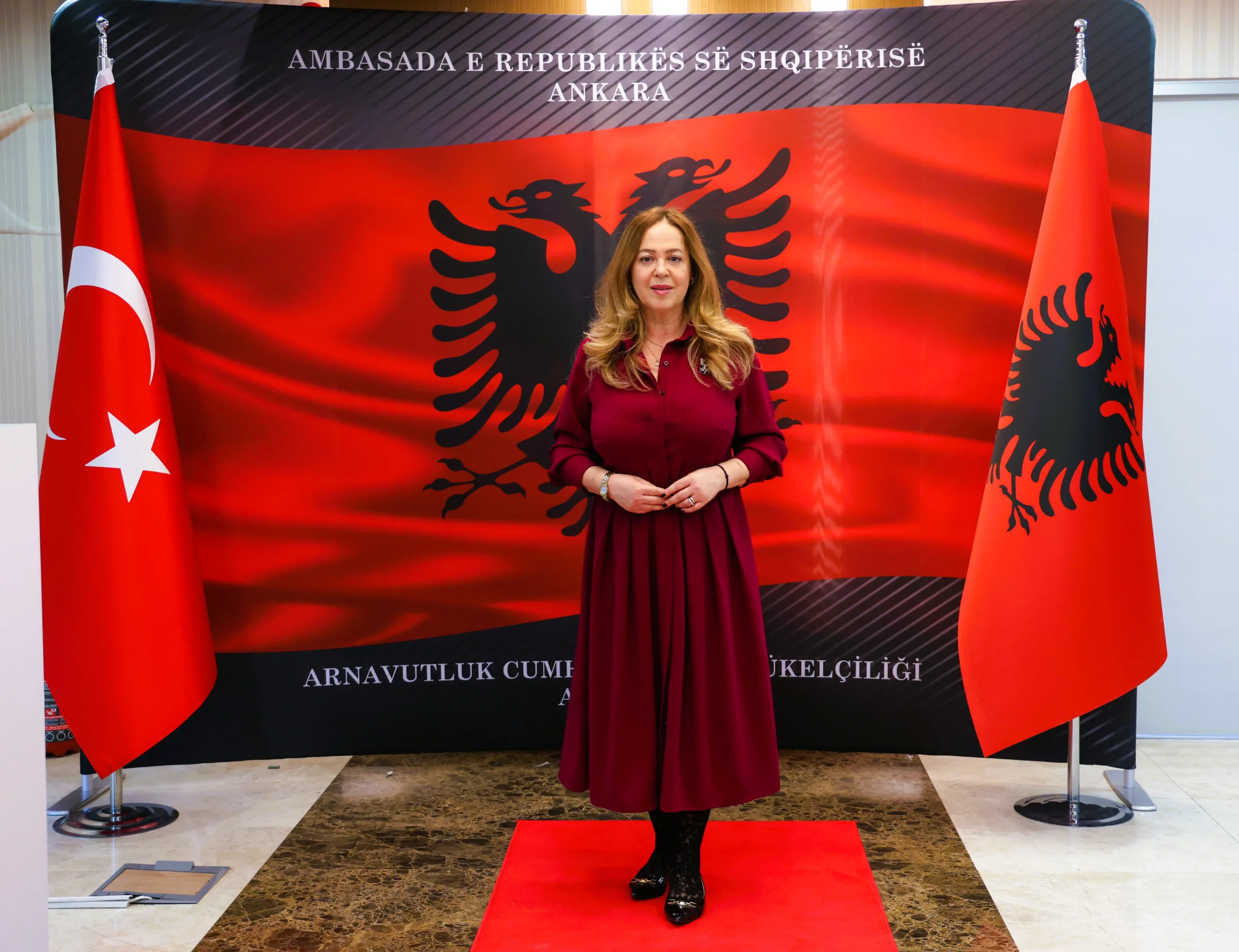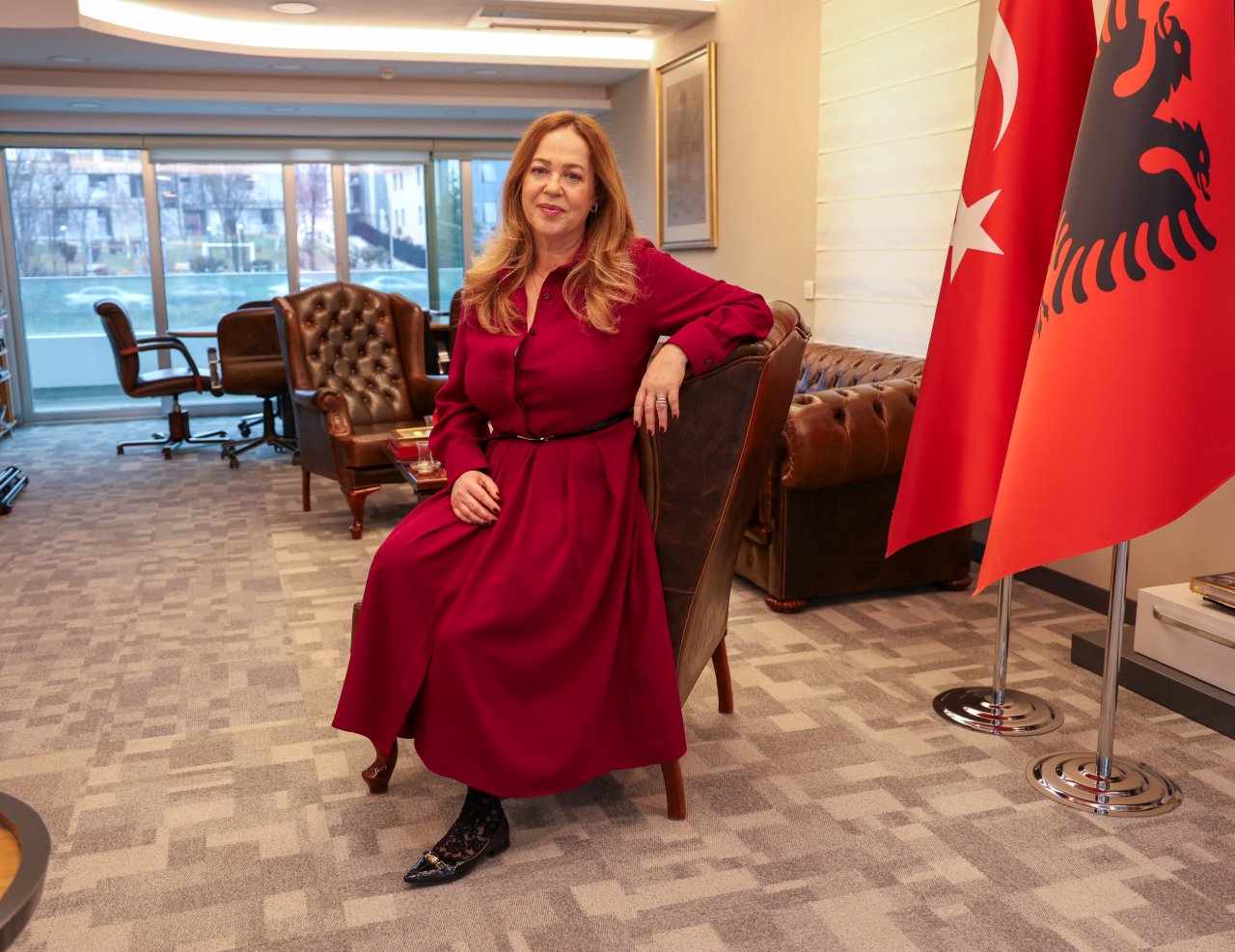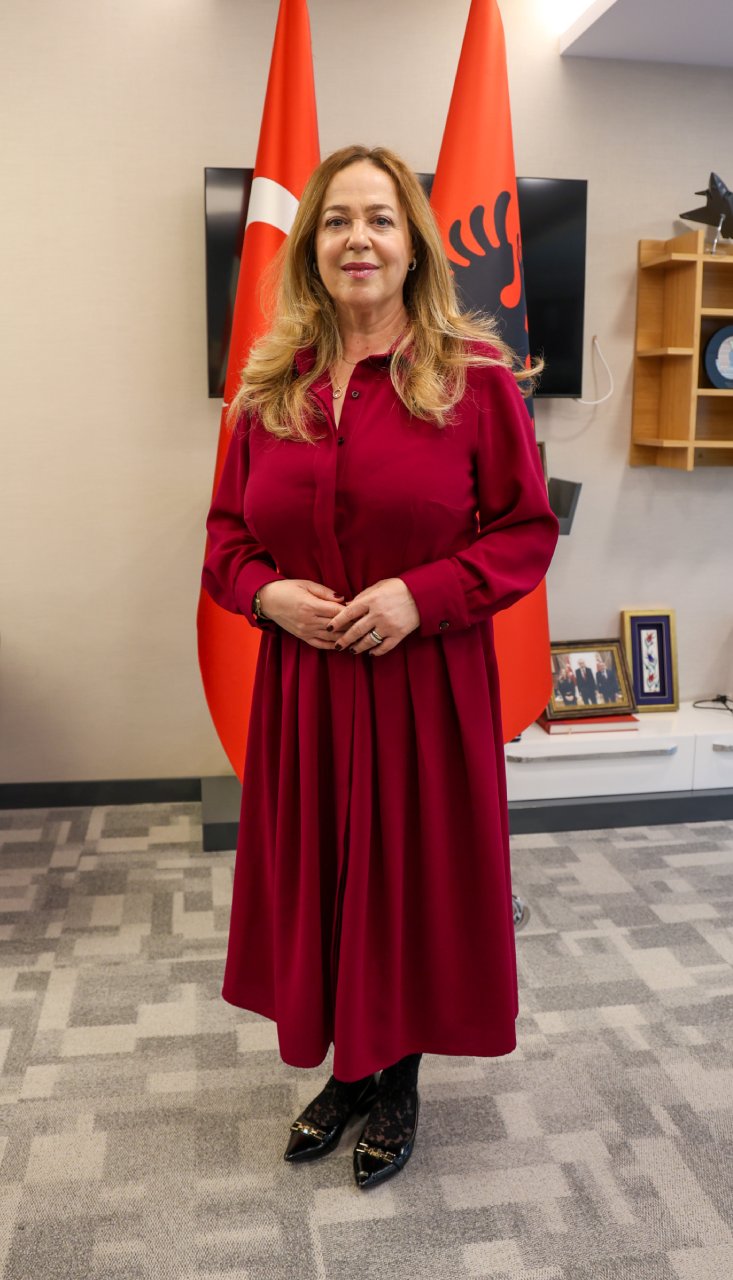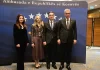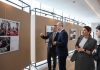
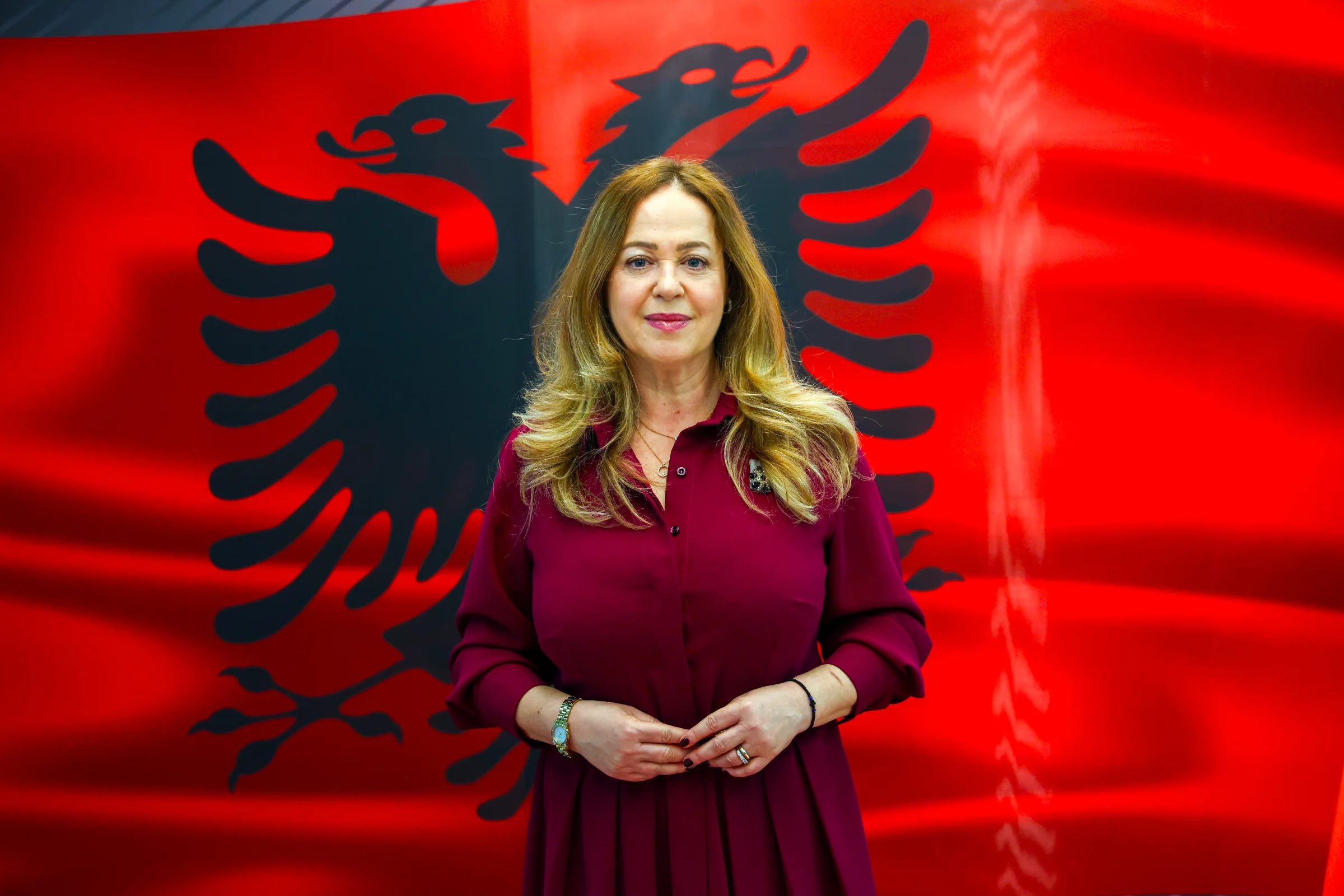
Albania’s Ambassador to Ankara, Blerta Kadzadej, said Türkiye and Albania share more than 500 years of common history. “That is a very long time. For five centuries, two cultures lived side by side and existed under the same empire. Naturally, we have added many things to each other’s lives. Our two peoples are more than friends. We are brothers,” she said.
Kadzadej also spoke about how Turkish shapes the way people communicate. “When you speak with a Turk, you have to listen patiently until the end of the sentence because the verb, the action, comes at the end. You cannot interrupt. You have to be patient. You learn to listen first, then think, and then respond. That is a beautiful feature of your language,” she said.
Before taking up her current post, Kadzadej served as Albania’s Consul General in Istanbul and has worked in Türkiye for more than seven years. She described relations between Albania and Türkiye as excellent. Noting that the two countries have been strategic partners since 2021, she said, “From the economy to defense, from industry to counterterrorism, from culture to health, from agriculture to many other related fields, we have signed numerous comprehensive agreements.”
THREE THOUSAND SHARED WORDS
Kadzadej pointed to cultural similarities rooted in more than five centuries of shared history. “Our two peoples are more than friends. We are brothers. For 500 years, two cultures lived together under the same empire. Of course, we influenced each other in many ways. I can talk about many common points. You may be surprised, but we share between 2,500 and 3,000 words,” she said.
She noted that many of these shared words in Albanian relate to everyday objects. “When I go to the market, I can say ‘battaniye’ (blanket), ‘perde’ (curtain), ‘döşek’ (mattress), ‘yastık’ (pillow),” she said.
SHARED TRADITIONS
Speaking about common customs, the ambassador said, “When a baby is born, we have the tradition of giving gold to the mother or the child, this is very common. When you get engaged, there is a celebration. I know you use the word ‘nişan’ (engagement). In Albania, during these mutual visits, the word ‘nişan’ is also commonly used. And it must start with Turkish delight, this is also a widespread tradition.”
“ARNAVUT KALDIRIMI” (ALBANIAN PAVEMENT)
Kadzadej highlighted Turkish words that include “Arnavut” (Albanian) and recalled her first days in Istanbul. “When I first came to Istanbul in 2019, my neighborhood was very close to Arnavutköy. I was living in Ortaköy. I could walk there, and by coincidence, my first day in Istanbul was spent in Arnavutköy,” she said.
“There are ‘Arnavut kaldırımları’ there. Albanians are masters of stonework. I believe those pavements in Istanbul, and perhaps in Bursa, Edirne, Manisa, and other cities, were built by Albanian craftsmen. That is why they were named after Albanians,” she added.
“Arnavutköy is a jewel of Istanbul. I see the entire neighborhood as a gem. Walking through those streets is wonderful. The architecture of the buildings, the art, the small workshops, I am truly happy that Arnavutköy exists,” she said.
“ALBANIAN STUBBORNNESS”
“I know the expression ‘Albanian stubbornness’ very well,” Kadzadej said. “Basically, Albanians are very straightforward. We are loyal and brave. I think that this loyalty shown throughout history, whether in the army, in trade, in business life, or in daily life, along with being frank and honest, has sometimes been perceived as stubbornness.”
THE OLD ALBANIAN DIASPORA
Kadzadej said the old Albanian diaspora is one of the elements that has brought the two countries closer. She said they are proud of Turkish citizens of Albanian origin and underlined the diaspora’s role in preserving culture and building bridges.
“They have many associations in different parts of Türkiye. Our old diaspora is mainly concentrated in Istanbul, Edirne, Bursa, and Izmir. Of course, there are also communities in Manisa, Trabzon, and Samsun. Wherever you go, you can meet people of Albanian origin. There is even a small town called Özvatan near Kayseri where Albanian is still spoken,” she said.
“ISTANBUL IS UNIQUE, ANKARA IS PEACEFUL”
Speaking about Istanbul and Ankara, Kadzadej said, “It is difficult to choose between Istanbul and Ankara. Istanbul is a unique city in the world. You cannot compare it to any other city. I believe everyone who serves in Istanbul leaves a piece of their heart there when they depart. You can get lost in neighborhoods and encounter thousands of years of history.”
“Ankara, on the other hand, offers a different kind of peace and has very well educated, highly intellectual people. It is a green city. Transportation is easy. Unfortunately, walking is not always easy because there are many hills. But both cities have their own uniqueness. As I said, Istanbul is unique. Istanbul is Istanbul. You cannot compare it with any city in the world,” she said.
“SERVING IN ANKARA IS LIKE A SCHOOL”
Kadzadej described Ankara as a place where diplomats learn continuously. “For every diplomat serving here, Ankara is like an educational program or a school. The issues you deal with, what you learn, the contacts you make, that is why Ankara keeps you constantly busy professionally, and this is very satisfying,” she said.
“There is not much free time because Ankara is a capital city and one of the capitals with the highest number of representations, embassies, and international organizations in the world. There are more than 140 missions. Therefore, there are always events organized by different embassies or ministries,” she added.
“TURKISH IS A VERY RICH LANGUAGE”
Kadzadej said she understands Turkish well but finds speaking it difficult. “Yes, I can manage at the market. I can get by with daily words. But when it comes to having a proper conversation, I do not want to harm the language. Your language is very rich, and if I randomly put words together, I may not fully express my ideas or reflect how I want to be perceived. Therefore, I prefer to speak the language in which I can express myself best,” she said.
“ŞİFA OLSUN”
Saying that one of her favorite Turkish expressions is “Şifa olsun,” Kadzadej explained, “This is not only about physical healing. It contains both spiritual and physical well being. I love it because it is one of the most beautiful wishes you can offer someone, wishing them health and goodness both in body and soul.”
THE LANGUAGE OF PATIENCE
Kadzadej returned to the idea that Turkish builds patience. “Your verbs are difficult. Truly difficult. In Turkish, a verb takes suffix after suffix and becomes a long word, which makes pronunciation harder. Negation is added inside the verb with the ‘-me’ suffix,” she said.
“When you speak with a Turk, you have to listen patiently until the end of the sentence because the verb, the action, comes at the end. You cannot interrupt. You must be patient. You learn to listen first, then think, and then respond. This is a beautiful feature of your language,” she said.