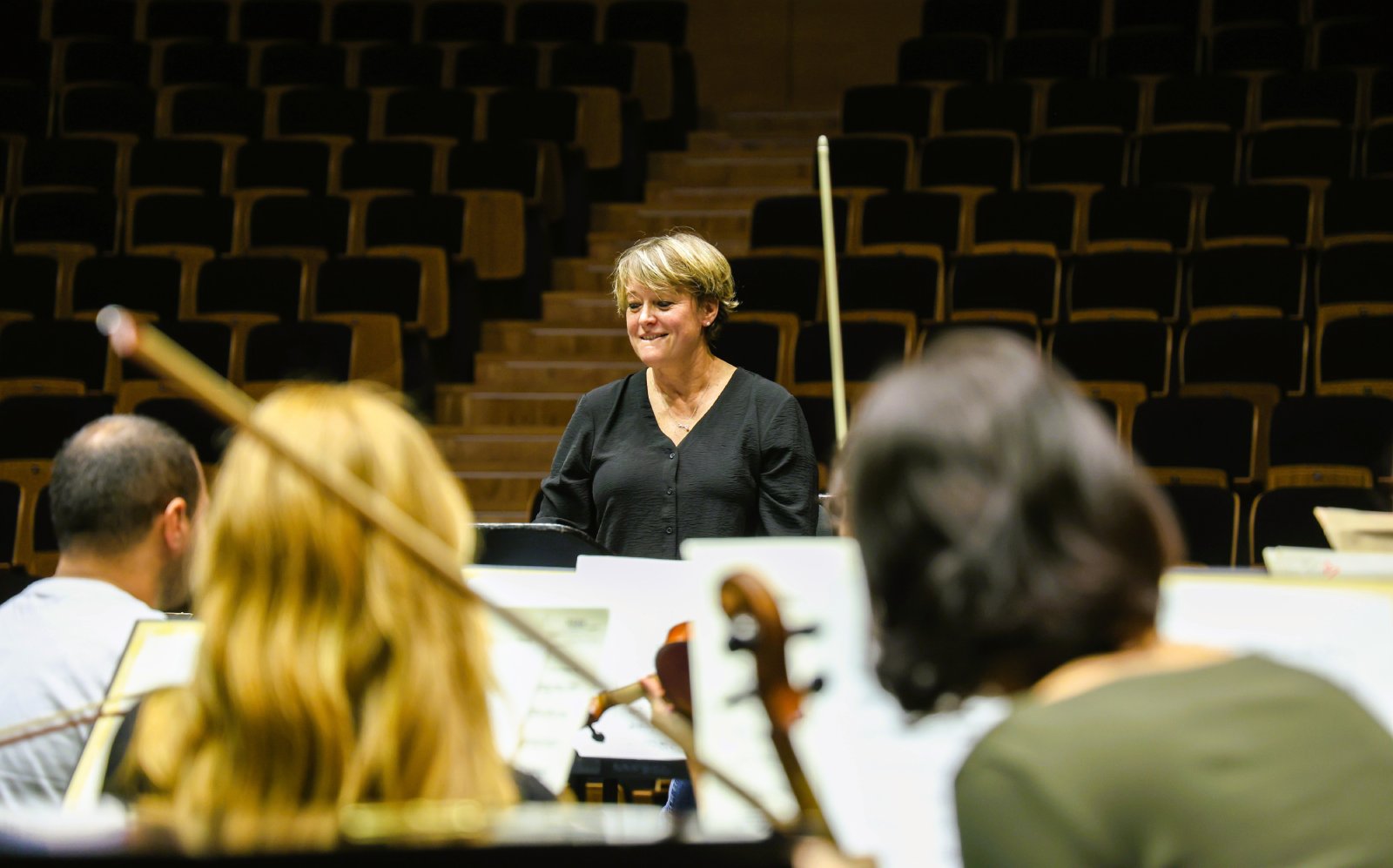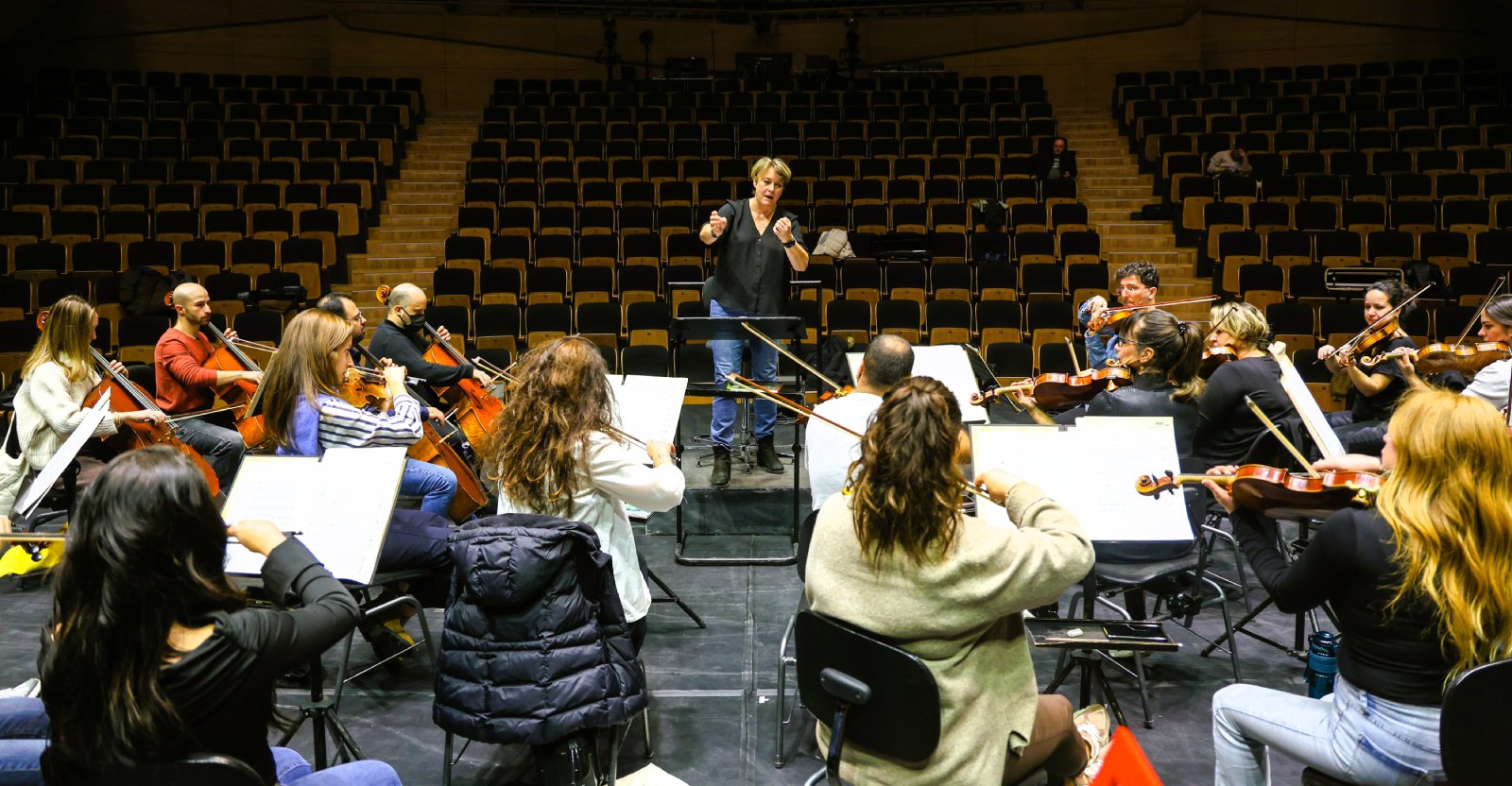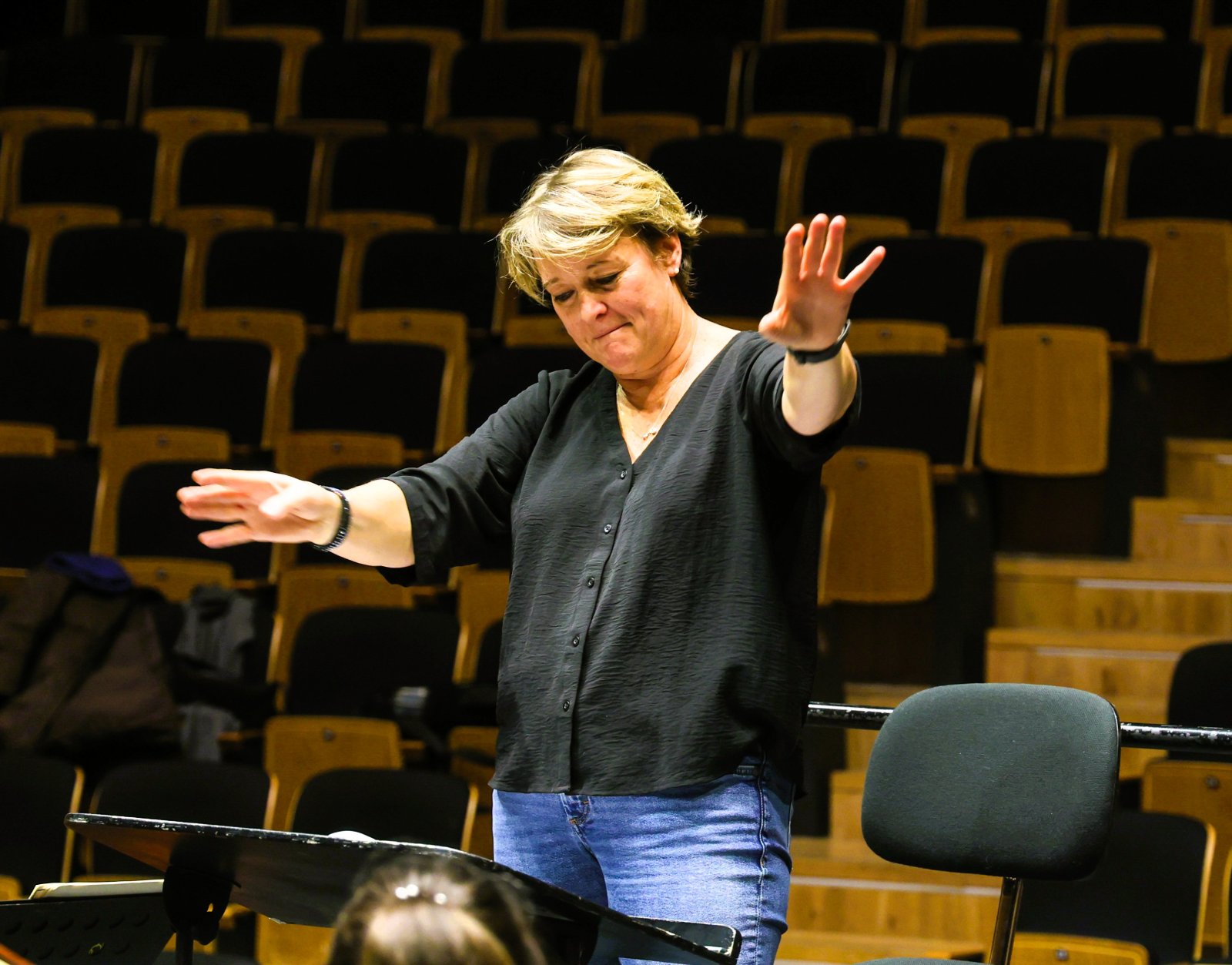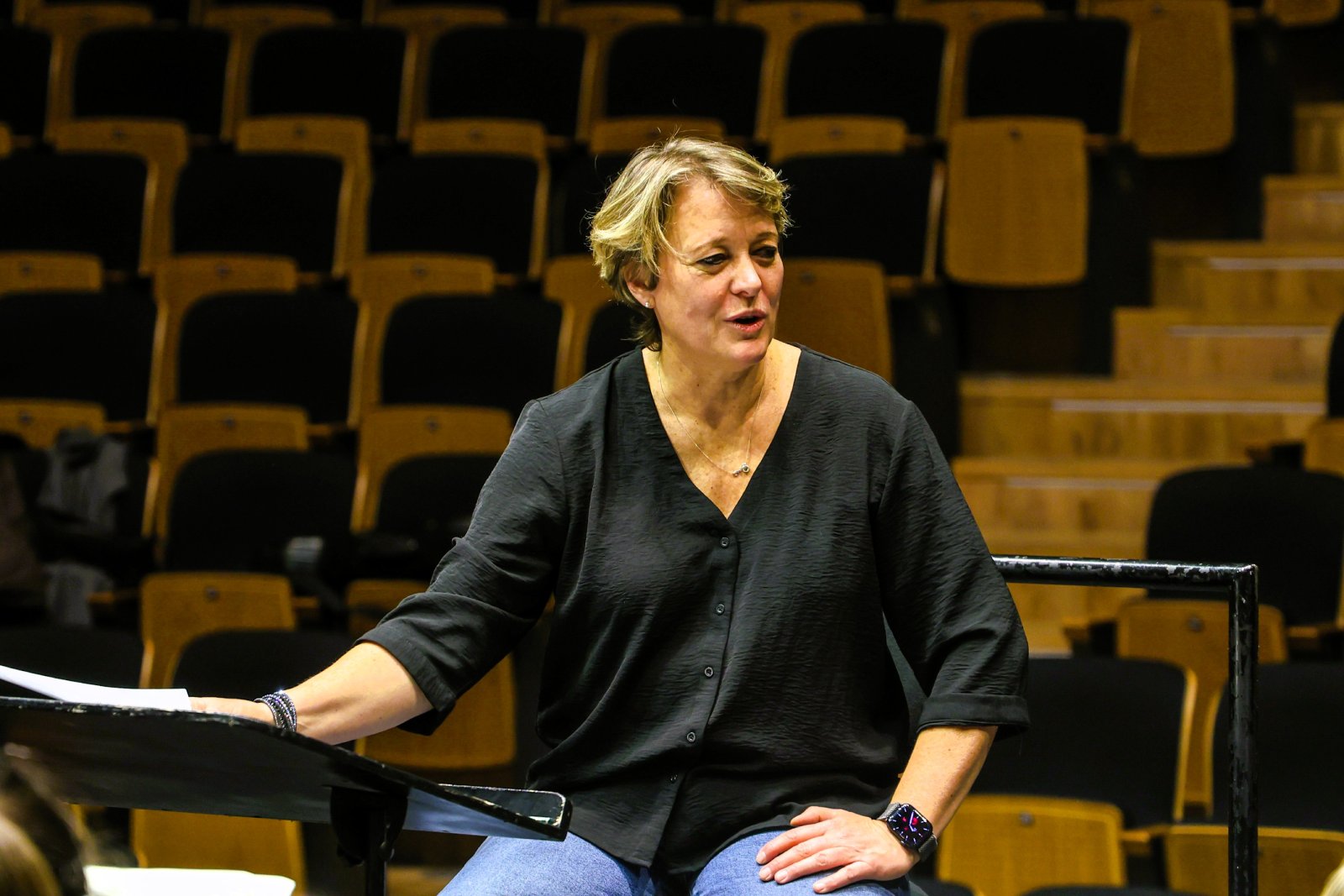
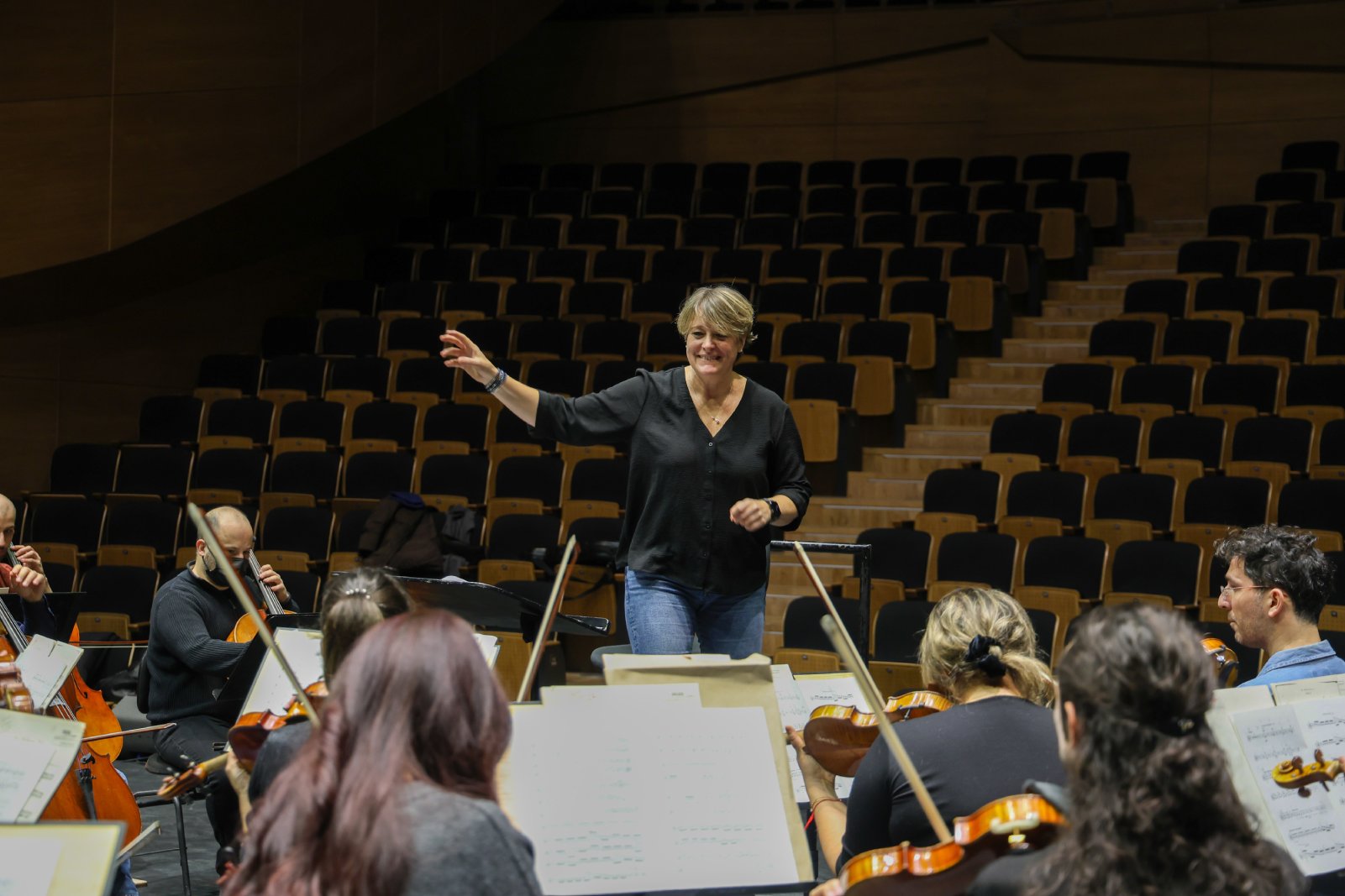
German conductor Cornelia von Kerssenbrock, who will take the stage this week with the Presidential Symphony Orchestra (CSO), said that in her early years, some male conductors told her a woman could not do this job. Noting that some of her female colleagues faced various forms of pressure, Kerssenbrock said, “I even know some female colleagues who were told by a conductor, ‘The best thing for you is to go to the kitchen.’ But today I think there is much more equality and respect between men and women. And respect can only be earned through the work we do. If we do good work, respect comes on its own.”
M. FERHAT YÜKSEL
The Presidential Symphony Orchestra (CSO) will perform tomorrow evening under the baton of Cornelia von Kerssenbrock, with violinist Hande Küden as soloist. Appearing on stage in Ankara for the first time, the German conductor said she has wanted to conduct since childhood. “I always wanted to bring people together and make music. I used to bring people together to sing or play. In my family, we always made music together. Then this desire grew, and I realized I wanted to do this more and develop my conducting skills,” she said.
THE BEST THING FOR YOU IS TO GO TO THE KITCHEN
Saying that she was the only woman at her school when she began conducting, Kerssenbrock described the difficulties of that period as follows: “Some conductors told me that a woman could not do this. I even know that some of my female colleagues were subjected to comments like, ‘The best thing for you is to go to the kitchen,’ by a conductor. But today I think there is much more equality and respect between men and women. And respect can only be earned through the work we do. If we do good work, respect comes on its own.” She added that people today are very accustomed to and accepting of female conductors. “Some even want to work specifically with female conductors, because this is now seen as something new and different,” she said.
I AM THE LEADER HERE
Kerssenbrock noted that all conductors go through periods in their careers when they have to struggle with the orchestras they work with. “When you are young, your skills may not yet be perfect. Other musicians start playing an instrument at the age of three, five, or six. But an orchestra or a choir is not an instrument you have at home at all times; you can only develop it over time. So, as a young conductor, you may make mistakes or feel uncertain about certain things. Good orchestras know this; they say, ‘Okay, there was a mistake here.’ Early in my career, I struggled with some orchestras’ over-tempo. I even had a serious conflict with a concertmaster; he constantly played at a different tempo. I fought for a long time, and eventually he accepted my tempo. This is perhaps something we, as women, need to learn: being able to say, ‘Okay, I am the leader here,’” she said.
I AM OPEN TO SUGGESTIONS FROM THE ORCHESTRA
Stating that she prefers working together, developing something together, and making music together rather than being a boss, the German conductor said she is very open to suggestions from the orchestra. Emphasizing that it is important for her to create the feeling that everyone wants the same conductor, Kerssenbrock said, “Of course, I make suggestions, and sometimes I have to say, ‘No, this is what I want.’ But this is not like a dictatorship. You work together. If you are leading a group, you can only lead it through shared leadership. Perhaps this comes from being a woman; I want to lead together, not by standing against others. Yes, I set the tempo, so in that sense I am the leader. But I only conduct the air; I am not the one producing the sound. They are the ones who make the orchestra sound so beautiful. I need to get them to play the way I want, but that only works if they want it too. If we all want the same thing, if I can explain what I imagine and they find it beautiful and respect it, then something truly good emerges,” she said.
WHAT MATTERS IS BEING HUMAN TOGETHER
Saying that music is enjoyable and brings people together, the conductor spoke about its universality: “As someone from Germany, I really enjoy working in Türkiye. It is wonderful that music brings us together in a shared emotion. Maybe we all speak English, but in fact we have different languages and different cultures. Despite that, music is a single language and brings people together. Especially in these difficult times, when there is so much negativity in the world, I believe music can say even more to people. Music can show that doing something together is possible. We are all human; we feel love, we feel pain, we feel everything. With music, we can show this together. Right now, I feel, I am one with the orchestra. We can present a single piece of music to the audience, without saying, ‘I am German, you are Turkish.’ We make music, and that is what matters most: being human together,” she said.
I AM A GREAT ADMIRER OF ASTOR PIAZZOLLA
The German conductor said she is a great admirer of Astor Piazzolla and explained her admiration as follows: “I conducted his opera Maria de Buenos Aires. The meaning of the opera is built on a desert metaphor set in a big city, Buenos Aires. At that time, many foreigners came to the city, and many young girls were exploited and virtually handed over. This is the tragedy of tango. This feeling is very strongly present in Piazzolla’s music. For me, it is very special that Piazzolla composed these dark emotions with such beautiful and emotional music. I believe we can carry this feeling into all the other works we will perform in this concert as well.”
Under the baton of Cornelia von Kerssenbrock, with Hande Küden as soloist, the CSO will perform Johann Sebastian Bach’s Brandenburg Concerto, Astor Piazzolla’s The Four Seasons of Buenos Aires, Edward Elgar’s Serenade for Strings, and Edvard Grieg’s Holberg Suite.